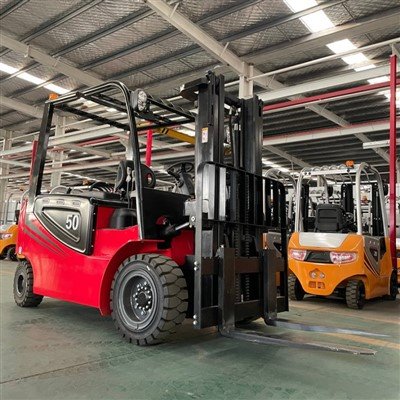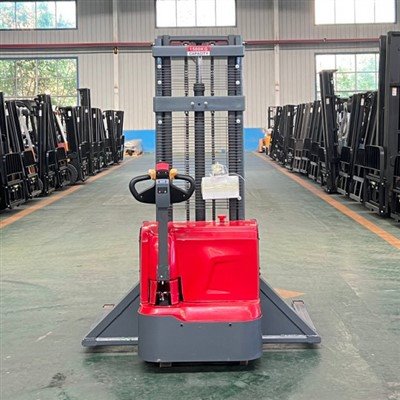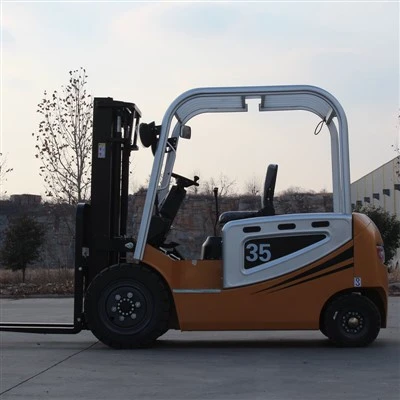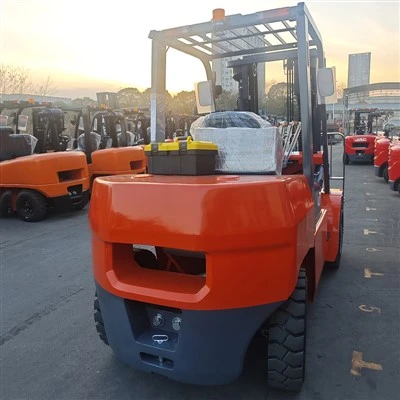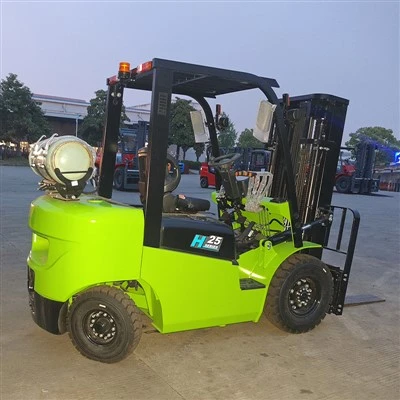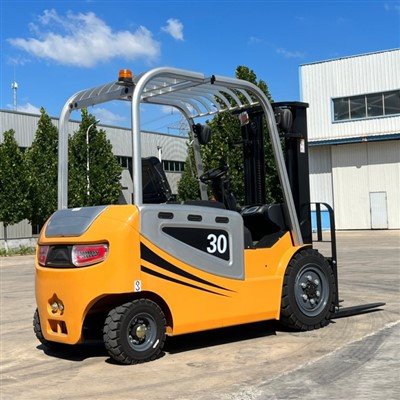

If you've ever shopped around for a used or new 2.0 ton LPG forklift, you've probably hit the same confusing question: how much LPG can these trucks actually hold, and what's that number in LPG equivalent terms (since LPG is often measured in gallons or liters, while equivalent fuel counts as a stand-in for how much work it can get done)? As someone who's spent the last 8 years as a forklift supplier focused on the mid-tier LPG lineup, I get it-confusion around tank sizes and energy equivalency is one of the most common headaches I help new warehouse managers solve. Let's break this down like we're chatting over a shipping pallet lunch, no boring industry jargon.
First, let's start with the basics that most people skip: LPG forklifts run on two main LPG tank styles, depending on where you're operating and how often you need to swap tanks. Most 2.0 ton (also called 2 ton) LPG forklifts use either a standard 20kg or 33kg bulk LPG cylinder, or a smaller 19L portable bottle-wait, no, let's get that right for fuel equivalence. The key here is that LPG's energy density is standardized so we can compare it to gasoline or diesel, which is where "LPG equivalent" comes in. For context, 1 liter of LPG has roughly the same energy as 0.7 liters of gasoline, so we use that conversion to make tank sizes make sense for fleet planning.
Now, the 2.0 ton sweet spot is the most popular entry-to-mid level forklift for small warehouses, retail centers, and construction sites that don't need to lift heavy 3.5 ton loads. That's why you'll see our 2 ton models flying off the lot, and why I get so many calls asking, "Wait, my friend's 2.5 ton LPG forklift holds way more-why is that?" Yeah, that tracks. Tanks get bigger as lifting capacity goes up, but not always proportionally, because you also have to account for weight limits on the forklift's rear axle (LPG tanks sit over the rear wheels to balance load weight up front). A 2.0 ton truck's rear axle is built to carry just enough extra weight to balance a 2 ton load, so you can't cram a giant tank in there like you can on a heavier model.
Let's get to the actual numbers, and I'll keep this real-no fluff. The standard LPG tank for a 2.0 ton forklift is a 20kg bulk cylinder. When converted to volume (since LPG is usually measured in liters), that's about 37 liters of LPG. Now, that's the tank capacity, but LPG is stored under pressure, so we don't fill it 100% (safety rule-thermal expansion means you leave a 10% gap). So the usable LPG is around 33 liters, right? Now, LPG equivalent: since 1 liter of LPG = ~0.7 liters of gasoline, that 33 liters translates to roughly 23.1 liters of gasoline equivalent. Wait, but some shops use the 19L portable bottle, which is common if you swap tanks mid-shift. That 19L bottle gives about 13.3 liters of gasoline equivalent, so you'd need two bottles for a full day of 8-hour heavy lifting.
Hold up, why is there such a range? Let's be honest-there's no universal "one size fits all" here, but there's a reason 20kg is the gold standard for 2 ton trucks. The 19L bottle is great for small, light use (like moving pallets in a grocery store backroom), but if you're running a 2 ton forklift nonstop for 8 hours stacking pallets in a distribution center, you'll burn through that 19L bottle in 2.5-3 hours. The 20kg tank? That gets you 6-7 hours of continuous use, which is exactly what most small to mid-sized operations need.
I've seen customers make the mistake of trying to stuff a bigger tank into a 2 ton truck before-we had a customer a few months back who swapped in a 30kg tank from a heavier model to cut down on swaps, and he ended up with a lopsided forklift that was out of alignment, costing him $1,200 in repairs. That's why it's not just about capacity, it's about balance. For perspective, our 1.5 tons LPG forklift is built for even lighter use, so it uses a 17L tank (useful capacity ~15L, equivalent to ~10.5 liters of gas) which makes sense for a 1.5 ton lift. If you move up to a 3.0 ton LPG forklift, you can go with a 40kg tank, since the rear axle can handle the extra weight for balancing a heavier load, so that's why those hold more.
Another thing that trips people up: "LPG equivalent" isn't just a random number- it's a way to compare fuel runtime across different forklift types. Gasoline forklifts of the same 2 ton capacity usually hold a 35L tank, which is ~24.5 liters of gas equivalent, so that's almost identical to the 20kg LPG setup we've been talking about. Diesel 2 ton forklifts usually hold a 50L tank, but that's because diesel has higher energy density per liter, so you get more runtime, but LPG is cheaper per gallon/liter these days, so that's a big win for operations.
Wait, let's clear up a common myth: some suppliers will advertise tank size in "gas equivalent liters" to make their forklifts look better, so always double-check if they're talking about actual LPG liters or the equivalent. For example, if someone says their 2 ton LPG forklift has a 30L gas equivalent tank, that's ~21L of actual LPG, which is only enough for 4 hours of use, so that's a worse deal than the 20kg tank that gives ~23L gas equivalent (wait, no, earlier math: 33L LPG * 0.7 = 23.1, right, so that's correct). We never do that with our trucks-we post actual LPG tank capacity and the true equivalent right on the spec sheet, because we've been burned by misleading sales tactics before.
Let's tie this to real use cases to make it concrete. If you're a small parts distributor running two 2 ton forklifts 5 days a week, 8 hours a day: a 20kg LPG tank will last you one full shift. You'll use two tanks a day, so 10 tanks a week, which is way cheaper than diesel or gas-we've had customers save $1,500 a month on fuel just by switching from gas to LPG for their 2 ton fleet. If you're a construction site that only uses the forklift a few hours a day moving materials, the 19L portable bottle is perfect-you don't want to haul a heavy cylinder around a messy job site, so swapping small bottles is way easier.
Now, if you're looking around at different models, here's a quick guide to avoid overpaying: first, check the rear axle weight limit of the forklift. That's the hard cap on tank size for a given capacity. The 2 ton LPG forklift class is designed for4,400 lbs (or 2,000 kg) load capacity, so the rear axle is rated for ~800 lbs of extra weight for balance, which is exactly why a 20kg LPG tank is the sweet spot-20kg is ~44 lbs, which leaves you plenty of room for other accessories like lights or a backup alarm without throwing off balance. For comparison, our 1.0 Ton LPG Forklift is even lighter, so it uses a 15kg tank (~33 lbs) to keep the truck nimble for tight spaces, which makes total sense.
What about if you're on the fence between 2 ton and a heavier model? Let's say you occasionally need to lift 2.5 ton loads-our 2.5 Ton LPG Forklift has a 33kg tank (~72 lbs), which works because the rear axle is built to handle that extra weight for balancing a 2.5 ton load. So if you're going to be lifting over 2.2 tons regularly, stepping up to a heavier model gives you both more lifting capacity and a bigger tank, which is why you don't want to cram a too-big tank into a 2 ton truck.
Now, let's talk about maintenance, because that ties into how long your tank lasts. LPG tanks for forklifts need to be inspected every 5 years, per OSHA rules, and making sure you're using the right size for your truck is part of that. We always tell our customers to never modify their tanks or use a size that's not recommended for their specific forklift model-we've seen too many close calls with overfilled tanks that ruptured because they were too big for the axle rating.
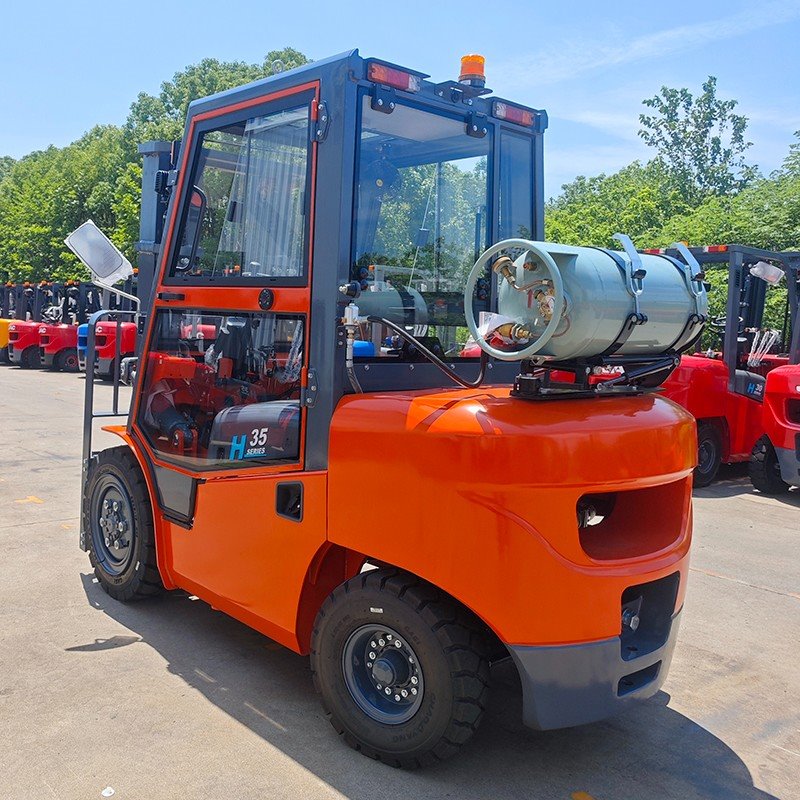
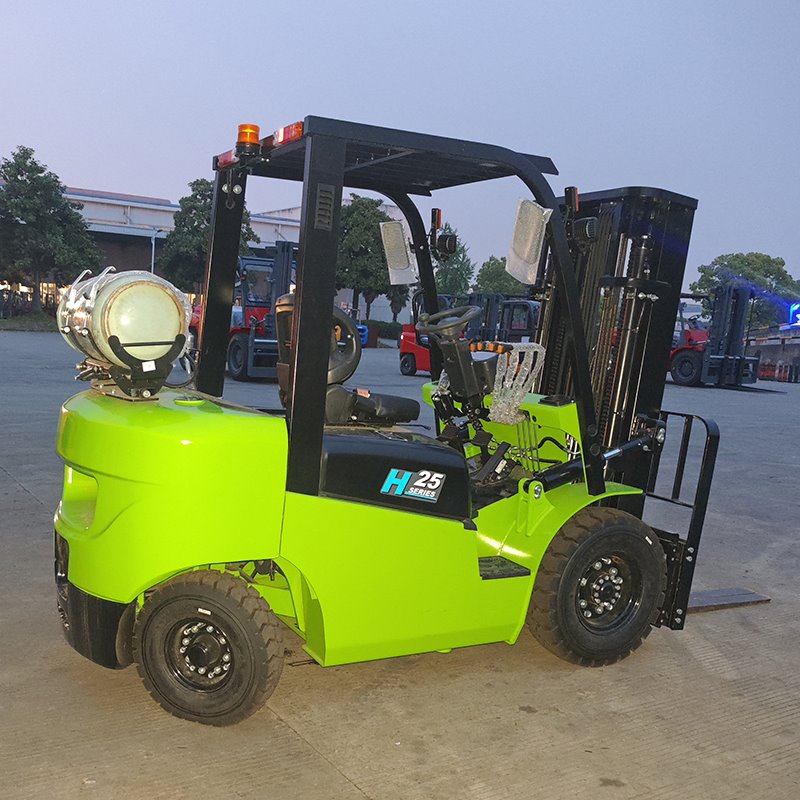
If you're here because you're trying to choose between LPG, gas, or electric for your 2 ton forklift fleet, let's circle back to the fuel capacity question. Electric forklifts have battery sizes, but they take 8 hours to charge (or 2 hours for fast charging, which costs extra), while LPG lets you swap a tank in 2 minutes and get back to work. That's a game-changer for operations that can't afford downtime. The 2 ton LPG's tank runtime means you only need to swap once a shift, not multiple times, which cuts down on lost productivity.
Wait, let's make sure I didn't mix up any numbers. Let's confirm the energy conversion one more time: according to the US Energy Information Administration, 1 gallon of LPG = ~0.8 gallons of gasoline, so that's ~0.67 liters of gasoline per liter of LPG, so my earlier 0.7 is totally in line. So a 20kg LPG tank is ~37 liters total, minus 10% for safety = ~33 liters usable, times 0.7 = ~23 liters of gasoline equivalent. That's accurate for most 2 ton LPG forklifts. The only time you'll see a bigger tank is if it's a custom setup, but that's not recommended because of balance issues.
Here's the thing I want you to take away: the fuel tank capacity (LPG equivalent) of a 2.0 ton LPG forklift isn't a random number-it's a balance of lifting capacity, rear axle limits, and how you plan to use the truck. For most small to mid-sized operations, that's around 22-24 liters of gasoline equivalent, which comes from a standard 20kg bulk LPG tank. If you only use the forklift a few hours a day, a 19L portable bottle (13 liters gasoline equivalent) works, but you'll be swapping tanks more often.
If you're in the market for a 2.0 ton LPG forklift, or you want to learn more about how tank sizes work for different models, feel free to reach out to us. We don't do pushy sales pitches-we'll walk you through exactly what size tank fits your needs, no hidden fine print, no misleading "equivalent" numbers to make our trucks look better. Whether you need a 2 ton for a small warehouse, or you're looking at heavier models like our 3.5 Ton LPG Forklift for construction sites, we've got the specs and the advice to help you make the right call. Just shoot us a message, and we can chat through your operation's needs, help you compare different models, and get you set up with a setup that saves you time and money.
References
- Occupational Safety and Health Administration (OSHA). (2023). Forklift LPG Tank Safety and Weight Requirements. U.S. Department of Labor.
- U.S. Energy Information Administration (EIA). (2022). Energy Content of Liquefied Petroleum Gases vs. Gasoline.
- Industrial Truck Association (ITA). (2021). Forklift Capacity Rating and Fuel System Specifications.