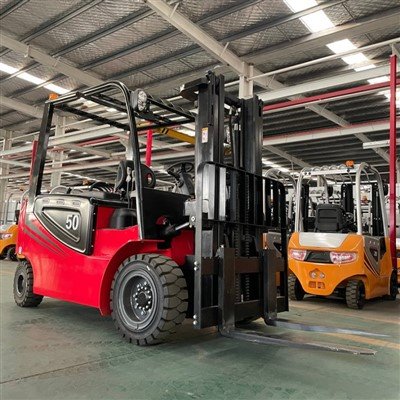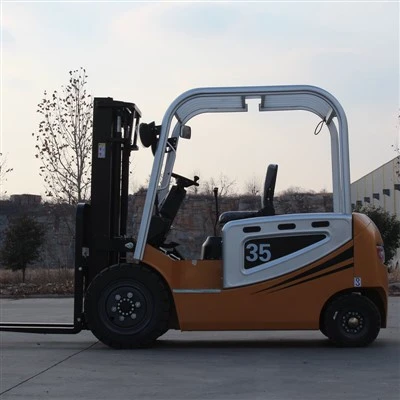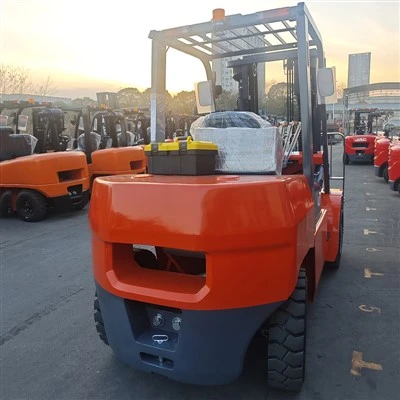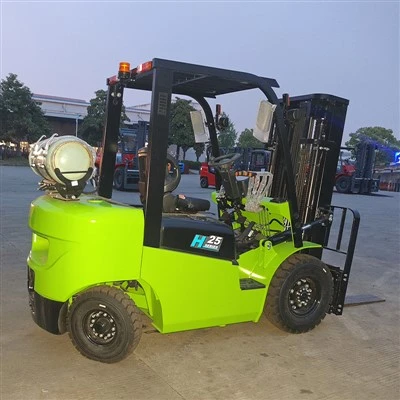

Hey guys, Sarah here from the team that works on all things LPG forklifts-specifically our lineup of dependable models, including the 2.5 Ton LPG Forklift that's been such a workhorse for warehouses, construction sites, and logistics yards lately. Today, I'm walking you through one of the most common maintenance tasks that keeps these trucks running smooth: replacing the spark plugs. I've done this on dozens of our 2.5-ton LPG forklifts (and even helped with a few on 1.5 Tons LPG Forklift and 3.0 Ton LPG Forklift models too, since a lot of the basics cross over), so I can tell you this isn't as scary as it sounds. Most of you can knock this out in an hour or less with some basic tools, no fancy garage setup required. Let's dive in.
First, let's talk about why spark plugs matter for your 2.5-ton LPG forklift. Unlike gas-powered cars, LPG engines run a little different-they burn propane instead of gasoline, but spark plugs still do the exact same job: ignite the fuel-air mix in the combustion chamber. If your plugs are worn out, you'll notice things like rough idling when you're sitting with the forks up, slower throttle response when you're moving a heavy load, or even misfires when you try to rev the engine to climb a small ramp. For a forklift that's handling 2.5 tons of material every day, small issues with spark plugs turn into big headaches fast-like missed deliveries, downtime, or even extra fuel costs because the engine isn't burning LPG efficiently. I can't tell you how many times a fleet manager has called us saying their forklift is acting "off" and turns out it's just a set of old spark plugs. Pro tip: check your owner's manual (we've got a downloadable one on our 2.5 Ton LPG Forklift page if you lost yours) for the recommended replacement interval-usually every 1000 hours, but if you run your forklift 24/7, you might want to bump that to every 800 hours.
Before you get your hands dirty, let's cover the prep work. Safety first, always. Forklifts are heavy, so you can't skip this part. First, turn off the engine and take the key out-don't just trust that it'll stay off. Then, disconnect the LPG tank. This is super important because LPG is flammable, and we don't want any accidental sparks happening while we're working. I always disconnect the negative battery terminal too-another safety layer, just in case a tool slips and touches something metal. Next, let the engine cool down for at least 30 minutes. Spark plugs are screwed into the hot engine block, and if you try to yank them out right after the engine's been running, you can strip the threads or even break the plug, which is a nightmare to fix. Finally, gather your tools. You'll need a spark plug socket (the kind with a rubber insert to hold the plug so it doesn't drop), a ratchet and extension bar, a gap gauge (or feeler gauges), a torque wrench, and of course, the new spark plugs. For our 2.5-ton LPG forklifts, we recommend specific spark plugs-check the manual, but most are iridium or platinum, not copper. Copper wears out too fast for the constant use forklifts get, so spending a few extra bucks on the right plugs will save you from replacing them every few months. If you've got a different model in our lineup, like a 1.0 Ton LPG Forklift, their plug size is smaller, so make sure you get the right socket too-no one wants to show up with a 14mm socket for a 10mm plug.
Now, the actual step-by-step. Let's start with locating the spark plugs on your 2.5-ton LPG forklift. They're on top of the engine, under the engine cover-usually there's a few bolts holding the cover on, so just remove those and lift it off. You'll see wires (or coils, on newer models) going to each plug. Mark each wire with a piece of tape if you have to, so you put them back on the same plug later-nothing worse than mixing up the wires and having your engine run like trash. Once the wires are off, you'll see the spark plugs sitting in the engine's cylinder heads. Now, here's a trick I learned early on: before you loosen any plugs, use a compressed air can (or an air compressor with a nozzle) to blow out the area around each plug. Forklifts work in yards and warehouses, so there's always dust, dirt, and debris around the plugs. If you don't blow that out, when you pull the plug, all that gunk will fall into the cylinder, and you'll have to take the engine apart to get it out. Trust me, I've seen it, and it's a huge mess.
Next, take your spark plug socket, attach it to the ratchet and extension, and place it firmly over the first plug. Turn it counterclockwise slowly-don't force it, because if the plug is stuck, you could break the ceramic part. If it won't budge, you can tap the ratchet gently with a rubber mallet to loosen it, but never use a metal hammer. Once the plug is loose, pull it out by hand to avoid dropping it. Now, take a look at the old plug-this is a good way to tell if your engine is running right. If the electrode is worn down, or there's black, sooty buildup, that means your fuel mix is too rich, or you're running at idle too much. If there's white, chalky buildup, that's oil getting into the cylinder, which is a sign you might need to check your piston rings, but that's a bigger job. Either way, noting the old plug's condition can help you catch small issues before they turn into big repairs.
Now, let's prep the new spark plug. First, check the gap. The gap is the space between the center electrode and the ground electrode-if it's too big or too small, the spark won't ignite the fuel mix properly. For our 2.5-ton LPG forklifts, the gap is usually between 0.030 and 0.035 inches, but again, check the manual. Use your gap gauge to measure the gap. If it's too small, you can gently bend the ground electrode outward; if it's too big, you can tap it lightly on a hard surface, but be careful not to break it. Don't adjust the center electrode-only the ground one. Also, a quick note here: do NOT use anti-seize compound on LPG forklift spark plugs. Some people do this for gas cars, but LPG engines don't need it, and it can actually mess with the spark's heat range. Just leave the plug as is.
Now, install the new spark plug. Start by twisting it in clockwise by hand-this is super important, because if you cross-thread it (screw it in at an angle), you'll strip the engine's cylinder head, and that's a costly repair. Once it's finger-tight, use your torque wrench to tighten it to the specified torque. For most forklift spark plugs, that's between 15 and 20 foot-pounds, but again, check the manual-using the right torque is key. If you over-tighten, you'll crack the plug or the cylinder head; if you under-tighten, the plug will come loose, and you'll lose compression, leading to misfires.
Repeat this process for all the spark plugs. Once they're all in and tightened, put the wire (or coil) back on each one-make sure you hear a click, so it's secure. Then, put the engine cover back on and tighten the bolts. Now, reconnect the negative battery terminal and the LPG tank. Now, start the engine and let it idle for a few minutes. Listen for any rough idling, or check the exhaust-there shouldn't be any weird black smoke, and the engine should run smooth. Take it for a quick test drive around the yard if you can-notice how the throttle response is better, no more misfires when you accelerate. That's exactly what you want.
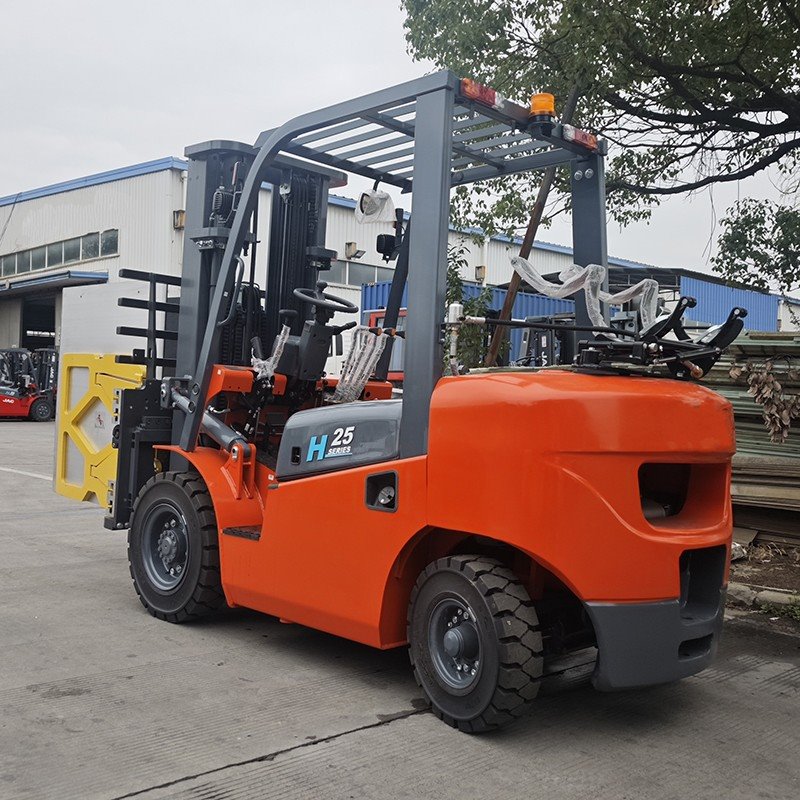
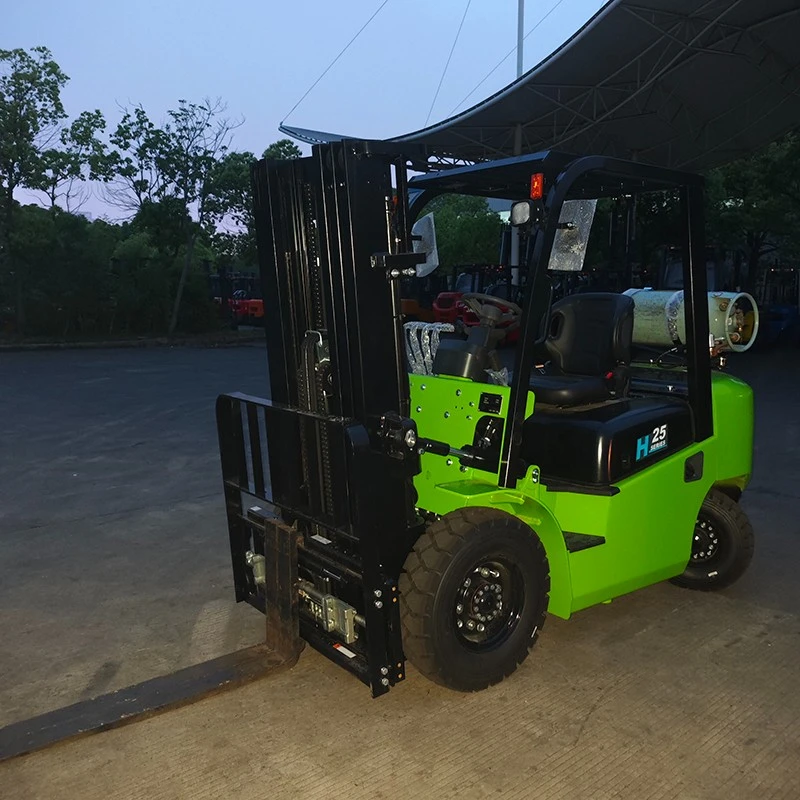
Wait, a few common mistakes I see people make, especially with our LPG forklifts. First, using the wrong spark plugs. I know it's tempting to grab the cheapest ones at the auto parts store, but LPG engines run hotter than gas engines, so you need plugs designed for high-heat applications. Our recommendation is always to use the plugs we specify in the manual-they're calibrated for our LPG forklifts, so you won't have issues. Second, skipping the gap check. A lot of people just throw the new plugs in, and if the gap is off, you'll still have misfires, no matter how new the plugs are. Third, not letting the engine cool down. I've had a friend break a spark plug trying to remove it from a hot engine, and they spent 4 hours getting the broken piece out-avoid that by waiting 30 minutes. Fourth, mixing up the plug wires. If you do that, the engine will run unevenly, and you'll think you messed up the installation until you realize you swapped cylinder 2 and cylinder 4. That's why marking the wires is such a simple but important step.
Now, if you're not comfortable doing this yourself, no stress-we offer maintenance services for all our LPG forklifts, including the 2.5 Ton LPG Forklift, 3.5 Ton LPG Forklift, and all our other models. Regular maintenance like spark plug replacement is what keeps your forklift running reliably, which is crucial for your business-downtime costs you money, and we know that. Our team has years of experience working on all kinds of LPG forklifts, so we can get this done fast and correctly, without any mistakes.
If you're in the market for a new LPG forklift, too, we've got a full lineup to fit your needs: we've got compact models like the 1.0 Ton LPG Forklift for tight warehouse spaces, mid-range options like the 2.5-ton that's perfect for general use, and heavy-duty models like the 3.5-ton for moving bigger loads. All our forklifts are built with durability and fuel efficiency in mind, so you get the most out of every LPG fill-up.
Whether you're doing the spark plug replacement yourself or looking to upgrade your entire forklift fleet, we're here to help. If you have questions about maintenance, need to order parts, or want to learn more about our LPG forklift models, reach out to our team today to connect for a purchase or service discussion. We're always happy to help forklift owners keep their equipment running strong.
References:
- Forklift LPG Engine Maintenance Manual, Industrial Truck Association, 2022.
- Spark Plug Specifications for LPG-Powered Material Handling Equipment, Society of Automotive Engineers (SAE) International, 2021.
- Regular Maintenance Best Practices for 2.5 Ton LPG Forklifts, Material Handling Industry Association, 2023.
- Safety Protocols for LPG Forklift Maintenance, Occupational Safety and Health Administration (OSHA), 2022.