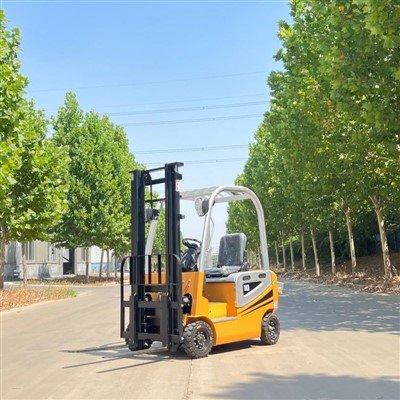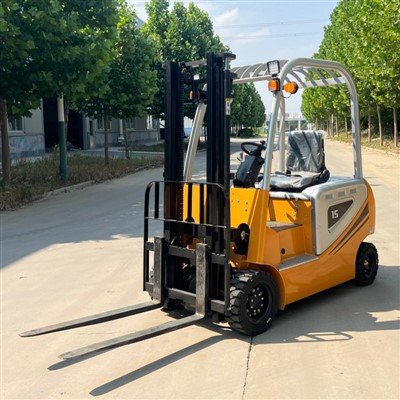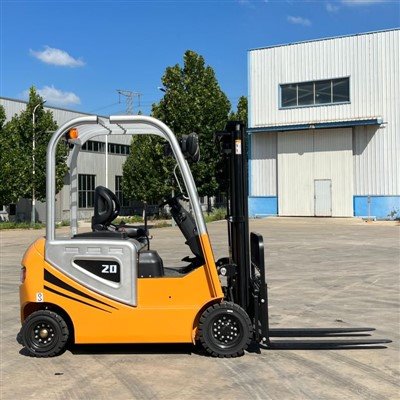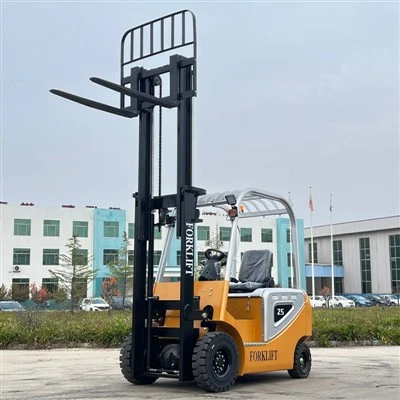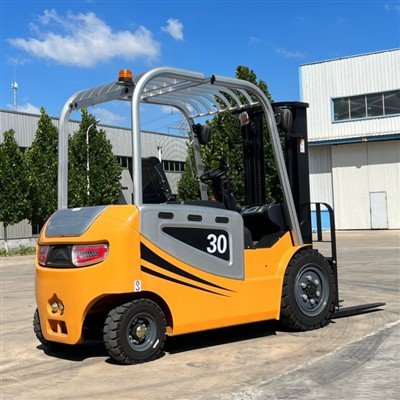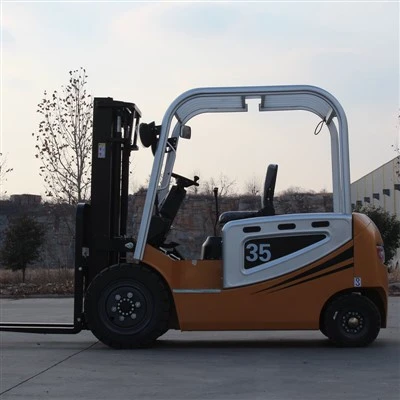
As an essential tool for modern logistics and handling, electric forklifts are widely used in warehousing, manufacturing, and other fields due to their high efficiency and environmental friendliness. Their core components can be divided into five major systems, each performing its own function and working closely together. The following is a detailed analysis:
I. Power System
The power system of an electric forklift consists of a battery pack, an electric motor, and an electronic control unit.
1. Battery Pack: Typically uses lead-acid or lithium batteries, with a voltage range of 24V to 80V. For example, mainstream 3-ton electric forklifts are often equipped with a 48V/500Ah battery, which has a battery life of approximately 6-8 hours (see the "2023 Technical Report of the China Construction Machinery Industry Association"). Lithium batteries are gradually replacing lead-acid batteries due to their high energy density and fast charging speed.
2. Electric Motor: These are divided into a drive motor and a hydraulic motor. The drive motor generally has a power of 5-15kW and is responsible for moving the forklift; the hydraulic motor has a power of 3-10kW and is used for lifting cargo.
3. Electronic Control Unit: This uses sensors to adjust motor output, achieving precise control of energy consumption and speed.
II. Hydraulic System
The hydraulic system is the core of a forklift's lifting and tilting movements and includes:
1. Hydraulic Pump: Converts electrical energy into hydraulic energy, typically at a pressure of 15-20 MPa.
2. Hydraulic Cylinder: Divided into lift and tilt cylinders, lift cylinders have a stroke of up to 3 meters (such as the Hangcha Group X-series electric forklift).
3. Control Valve: Regulates oil flow to ensure smooth operation.
III. Mast and Forks
1. Mast: Made of high-strength steel, it comes in single-stage, double-stage, and three-stage configurations. The three-stage mast has a maximum lifting height of 6 meters.
2. Forks: Standard lengths range from 1-1.2 meters, with a load capacity of 1-5 tons, and adjustable spacing to accommodate different pallets.
IV. Control System
1. Operating Handle: Integrates lift, forward/reverse, and other functions. Some models are equipped with a smart touchscreen.
2. Sensors: Such as load cells and tilt sensors, to prevent overloading or rollover.
V. Safety Devices
1. Emergency Power Off Switch: Cuts off power in emergencies.
2. Warning Lights and Horn: Complies with ISO 3691 standards to ensure a safe working environment.
Extended Analysis:
With technological advancements, electric forklifts are incorporating intelligent features, such as automated guided vehicles (AGVs) and remote monitoring systems. In the future, lightweight materials (such as aluminum alloy masts) and fast-charging technologies will further optimize their performance.
The above analysis provides a clear understanding of the structural logic and technological innovations of electric forklifts, providing a reference for purchasing or maintenance.