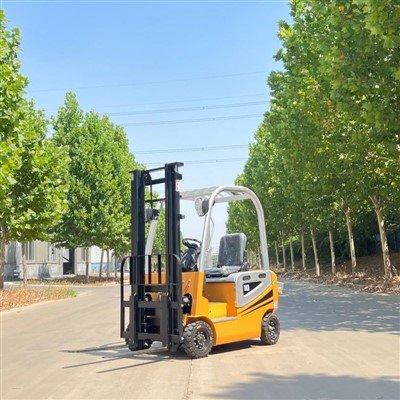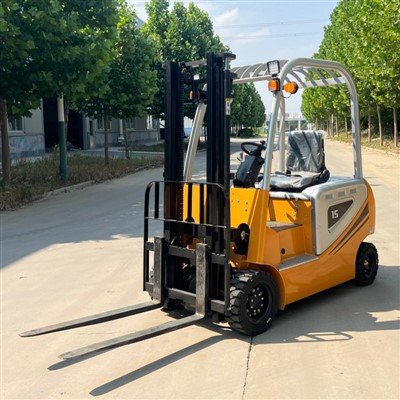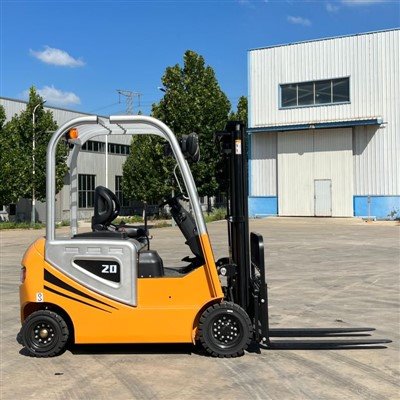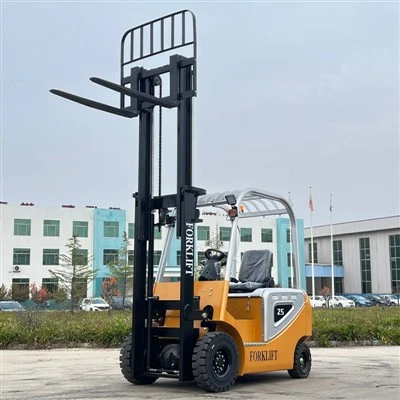
I. Core Classification and Application Scenarios of Warehouse Forklifts
Warehouse forklifts are critical equipment for logistics handling. Based on their structure, functions, and application scenarios, they are primarily divided into the following five categories:
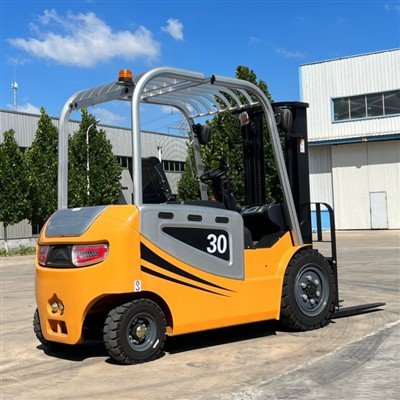
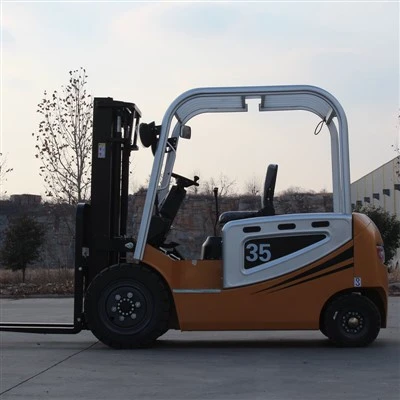
1. Counterbalanced Forklifts
- Features: Rear counterweight design provides strong stability and a high load capacity (1-10 tons).
- Applications: Outdoor loading and unloading, heavy cargo handling, but requiring a large turning radius (3-4 meters).
- Technology Upgrades: In recent years, there has been a significant trend towards electrification, with lithium-ion battery versions offering a battery life of 8-10 hours (Source: China Construction Machinery Industry Association 2023 Report).
2. Reach Trucks
- Features: The mast can be moved forward, eliminating the need to move the entire vehicle after the forks are extended, saving space.
- Applications: Warehouses with high-bay racks (6-12 meters), where aisle widths of only 2-2.5 meters are required.
- Sub-models: There are two types: the mast-reaching and the fork-reaching, with the latter offering greater flexibility.
II. Technological Breakthroughs in Narrow Aisles and Automated Forklifts
1. Narrow Aisle Forklifts
- Categories: Includes three-way forklifts and side-to-side forklifts, requiring aisles as low as 1.6 meters.
- Advantages: Horizontal access is achieved through mast rotation or side shifting, improving space utilization by 40% (data source: "Modern Logistics Technology" 2022).
2. Electric Pallet Trucks
- Lightweight Design: Capacity of 1-2 tons, manual or electric options available, suitable for short-distance flat transport.
- Intelligent Iteration: Some models are equipped with load cells with an error of ≤0.5% (such as the Toyota Traigo 80 Series).
3. Automated Guided Vehicles (AGVs)
- Core Technology: Laser or magnetic strip navigation enables 24-hour unmanned operation.
- Industry Applications: In e-commerce warehousing, AGVs can achieve efficiency three times that of manual labor (example: Amazon's Kiva robotics system).
III. Selection Recommendations and Future Trends
Users should consider factors such as cargo weight, aisle width, and automation requirements. For example, narrow-aisle forklifts are suitable for high-density warehousing, while AGVs are more suitable for standardized process scenarios. In the future, forklifts will develop towards new energy (hydrogen fuel cells) and AI-powered collaborative operations. For example, BYD's hydrogen forklift, launched in 2024, has a battery life of 12 hours.