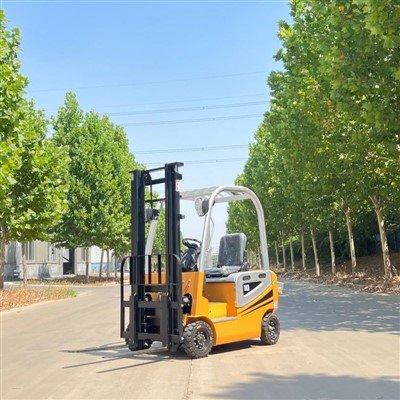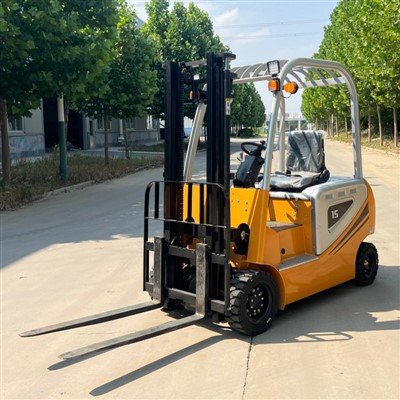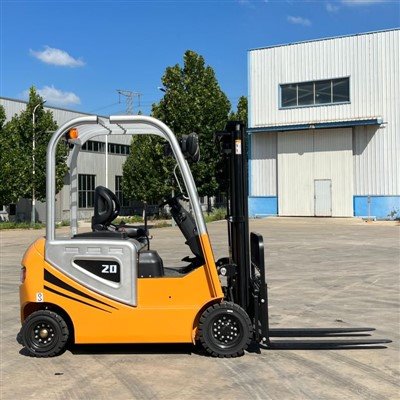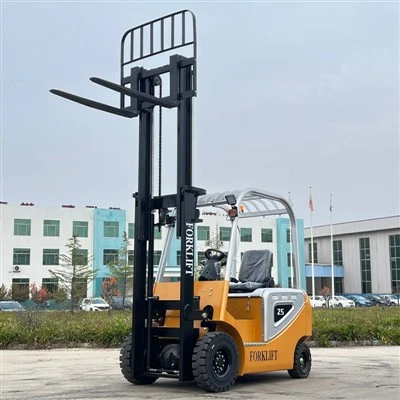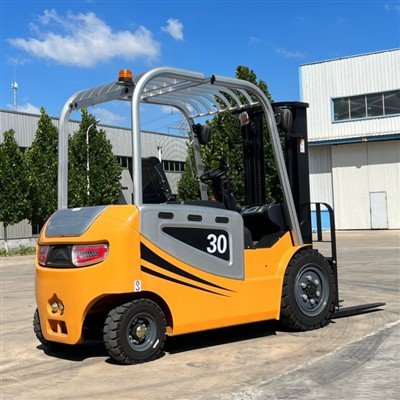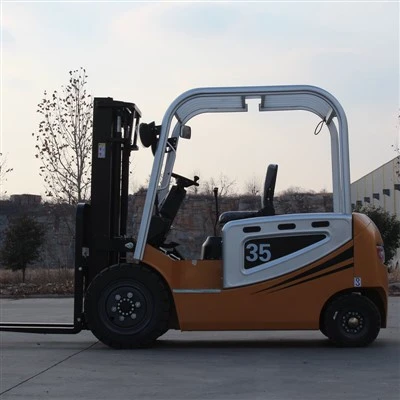
I. Core Components of a Fuel Forklift
Fuel forklifts are common handling tools in logistics and warehousing. Their structure can be divided into the following parts:
1. Powertrain:
- Engine: Typically a diesel engine (such as a 4-cylinder turbocharged engine), with a power range of 20-100 horsepower (refer to the "Forklift Engineering Technical Manual"). Diesel engines have a thermal efficiency of 40%, higher than gasoline engines (30%).
- Fuel Supply System: Includes a fuel tank (capacity of 50-120 liters), a high-pressure fuel pump, and fuel injectors.
2. Transmission:
- Transmission: Manual or automatic (such as the ZF 4WG200), with 3-5 speeds.
- Drive Axle: Equipped with a differential and wet brakes, with a load capacity of 1-10 tons.
3. Hydraulic System:
- Hydraulic Pump: Gear pump or plunger pump, with a pressure range of 150-250 bar.
- Lift Cylinder: Stroke 1.5-3 meters, lifting speed 0.3-0.6 m/s (ISO 2328 standard).
4. Body and Controls:
- Overhead Guard: Meets OSHA standards for falling object protection.
- Steering Wheel and Pedals: Some models are equipped with electronic power steering.
II. Typical Components of Electrical Appliances
Taking household appliances as an example, core components include:
1. Refrigeration Appliances (such as refrigerators):
- Compressor: Reciprocating or variable frequency, 80-200W (energy efficiency rating A+++).
- Condenser: Copper tube and aluminum fin structure, heat dissipation area 0.5-1.2 m2.
2. Air Conditioner:
- Evaporator and Condenser: Use hydrophilic aluminum foil, achieving a heat exchange efficiency of 60-70%.
- Circuit Board: Main control MCU (such as the STM32 series) with integrated temperature sensor.
3. Common Components:
- Circuit System: PCB thickness 1.6mm, 2-6 copper foil layers (IPC-6012 standard).
- Housing Material: ABS plastic (temperature resistant -20°C to 80°C) or galvanized steel.
III. Comparative Analysis of Fuel-Oil Forklifts and Electrical Appliances
1. Energy Efficiency:
- Fuel-oil forklifts consume approximately 3-5 liters of diesel per hour, while electrical appliances such as air conditioners consume 0.8-1.5 kWh (data source: U.S. Department of Energy).
2. Maintenance Cost:
- Forklifts require regular oil changes (every 500 hours), while electrical appliances only require filter cleaning (every three months).
3. Application Scenario:
- Forklifts are suitable for heavy-duty outdoor use, while electrical appliances focus on indoor environmental control.