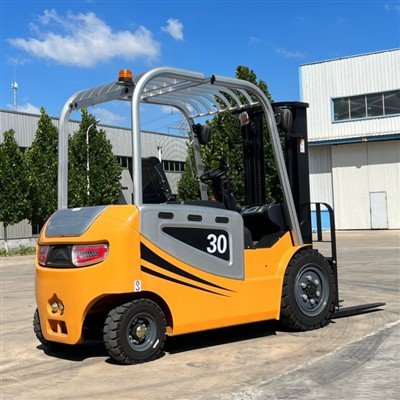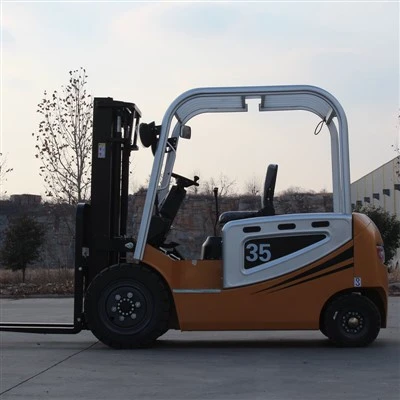
1. Pre-Start Preparation for Petrol Forklifts:
Before starting a petrol forklift, ensure that all necessary preparations have been completed. These preparations are crucial to ensuring the safe and efficient operation of the forklift.
1.1 Before operating a petrol forklift, the driver must hold a valid forklift driver's license.
1.2 Before starting, carefully check the engine oil level and refill it if insufficient.
1.3 The driver must regularly check the fuel level and refill it if insufficient to ensure proper operation of the forklift.
1.4 Regularly inspect the tires.
1.5 Carefully inspect the forklift for any damage or abnormalities.
1.6 Confirm that all operating levers are in the neutral position.
1.7 Carefully inspect the forklift's overall appearance to ensure it is intact and watch for any signs of leaks. Also, check that all screws are present and secure.
1.8 Adjust the driver's seat and armrests to a comfortable and appropriate working position.
1.9 Insert the ignition key, press the brake pedal, and turn the key clockwise to position I for 15 seconds to ensure the electrical system is properly activated. Then, turn the key clockwise again to position II and immediately release it. All instrument indicators should now display normal readings.
1.10 Test the forklift's forks and tilt the mast forward and backward to verify proper operation.
1.11 Verify the parking brake handle's function to ensure the forklift cannot move forward or backward when braking.
1.12 Turn the parking brake handle counterclockwise to verify the forklift's forward and reverse functions. During reverse, listen for the buzzer to sound.
2. Starting Operation
2.1 Ensure your seat belt is fastened.
2.2 Slightly raise the forks while tilting the mast backward. 2.3 When moving forward, steadily depress the right pedal. The speed will gradually increase as the pedal travel increases. When moving backward, steadily depress the left pedal. Similarly, the speed will increase as the pedal travel increases.
3. Precautions During Operation:
3.1 Operators must wear appropriate labor protection equipment during operation to ensure safety.
3.2 When handling cargo, ensure that the forklift's specified load does not exceed the forklift's load capacity. The forks must be fully inserted under the cargo and ensure that the cargo is evenly distributed on the forks. Lifting cargo with only a single fork tip is strictly prohibited.
3.3 When operating the forklift, starting, steering, traveling, braking, and stopping must be performed smoothly. Especially when steering on wet or slippery roads, slow down and drive slowly. The speed of lifting, lowering, and tilting can be adjusted by adjusting the travel of the control lever.
3.4 When traveling with cargo, lower the cargo and tilt the mast backward to ensure cargo stability.
3.5 Exercise extreme caution when operating on slopes. When the slope is greater than one-tenth of a degree, drive forward when going uphill and reverse when going downhill. Please note that steering is prohibited during both inclines. Furthermore, do not perform loading or unloading operations while the forklift is in motion.
3.6 When operating a forklift, always remain vigilant and pay attention to pedestrians, obstacles, and uneven road surfaces. Also, be mindful of the clearance above the forklift to ensure safe operation.
3.7 Standing on the forks is strictly prohibited, and no passengers are allowed on the forklift to ensure the safety of both cargo and personnel.
3.8 Stay clear of the forks and avoid walking or standing under them to prevent accidents.
3.9 When operating the vehicle and attachments, always remain seated in the driver's seat. Operation from any other position is strictly prohibited.
3.10 When handling cargo, be especially careful with unsecured or loosely stacked cargo. Exercise caution when handling large cargo to ensure safety during the handling process.
3.11 For high-mast forklifts with a lifting height exceeding 3 meters, pay special attention to the risk of falling cargo from overhead during operation and take appropriate protective measures if necessary. Also, maintain the mast tilted backward as much as possible during operation, and adjust the fore-aft tilt within the minimum range.
3.12 When refueling the forklift, always ensure the driver is not on board and the engine is off. Also, do not operate the ignition while checking the battery or fuel tank level.
3.13 In poor visibility, at intersections, or other unusual situations, sound the horn to sound a warning signal to alert surrounding personnel and vehicles.
3.14 When driving at night, always use the working lights to ensure good visibility and driving safety.
3.15 Always activate the turn signal before turning to alert other vehicles and pedestrians to avoid the vehicle.
3.16 While the forklift is in operation, always monitor the fuel level and refuel as needed, but never completely empty the tank of diesel. Always turn off the forklift when refueling.
3.17 If you need to stop the forklift in an emergency, immediately press the "STOP" button to ensure a quick and safe stop.
3.18 When the engine is hot, do not open the radiator cap to avoid burns or engine damage.
3.19 The operator should be familiar with and pay attention to the functions of the various instruments and signs on the forklift to ensure correct and safe operation of the forklift.
4. Shutdown Instructions:
4.1 First, drive the forklift to the designated parking location.
4.2 Next, repeatedly raise and lower the forklift and tilt the mast forward and backward to relieve pressure in the system.
4.3 Smoothly lower the forks to the ground, tilt the mast forward, and place the shift lever in neutral. Then, turn off the engine and disconnect the power cord.
4.4 Apply the parking brake handle clockwise to ensure the forklift is securely parked.
4.5 Check the fuel level in the forklift and refill if necessary.
4.6 Turn the key to the "0" position, remove the key, and then exit the forklift.
4.7 Finally, check the hydraulic oil level and refill immediately if necessary. Carefully inspect all forklift components for damage or abnormalities.