Why Forklifts That Meet Specs Fail Frequently in Cold Storage Operations
Forklifts delivering reliable performance in ambient-temperature warehouses often suffer drastically reduced uptime once deployed inside freezer zones. Many cold chain operators fall into the same procurement pitfall: selecting equipment purely based on rated load capacity, battery voltage and upfront purchase price. Yet operating conditions within cold storage differ fundamentally from standard warehouses.
The critical question procurement teams ought to ask is not: Can this forklift lift my pallets?
Instead, they should consider: When temperature swings, elevated humidity, high operation frequency and multi-shift workload coincide, can this forklift sustain continuous warehouse operations?
In frozen food warehouses, pharmaceutical cold storage facilities and third-party cold chain logistics hubs, forklifts are far more than handling equipment - they form an integral link across the entire cold chain. Unplanned equipment downtime triggers cascading consequences beyond the forklift itself: delayed loading schedules, rising labour costs, disrupted goods turnover, and quality risks for temperature-sensitive cargo. A dependable cold storage forklift must be specified according to the full spectrum of on-site operating conditions, rather than relying solely on nominal datasheet parameters.
Real Cold Storage Case Study: How Forklift Reliability Directly Impacts Business Operations
USCS (U.S. Cold Storage), a leading North American cold storage operator, offers highly valuable practical reference.
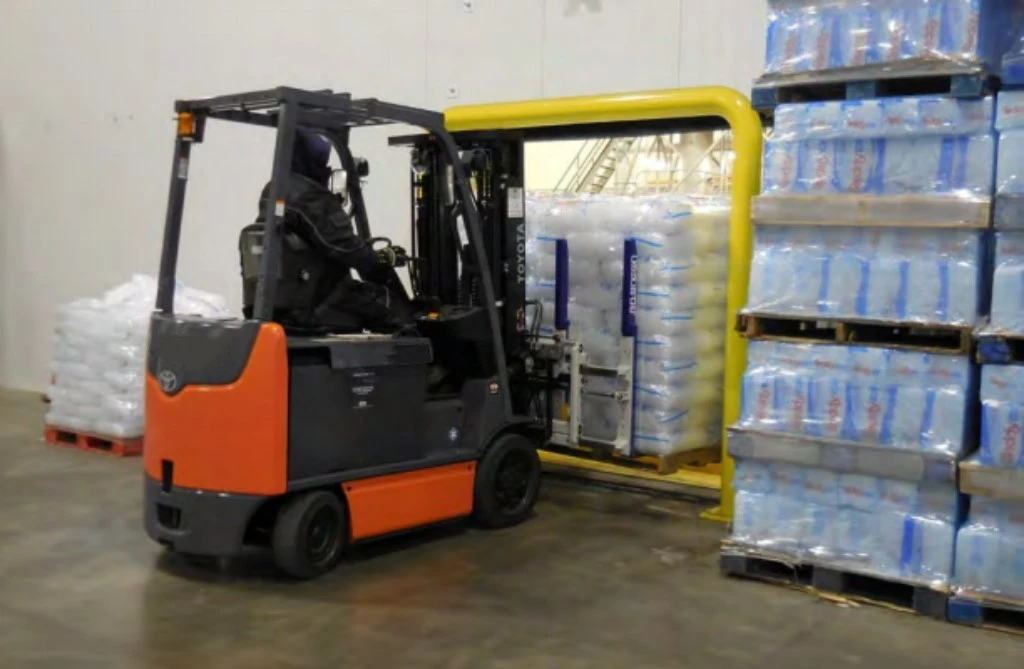
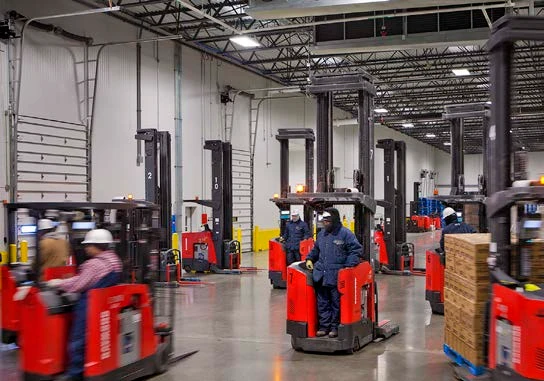
The firm runs multiple large-scale cold storage facilities storing fresh produce, pharmaceuticals and various temperature-sensitive goods. For its facilities in Wilmington, Illinois and Lebanon, Indiana, USCS partnered with Raymond Solutions to deploy a fleet purpose-built to withstand extreme low-temperature environments. The final rollout covered 71 units, including reach trucks, counterbalance forklifts, order pickers and pallet trucks.
This fleet processes over 100 million pounds of cargo monthly, operating 16–18 hours daily on a 7-day continuous shift schedule. One key takeaway emerges from this case: The core challenge of cold storage operation is not simply verifying whether a forklift can enter a freezer. The real evaluation criteria cover four dimensions: Can the battery sustain the targeted runtime?
Can electrical components survive repeated temperature changes?
Can operators maintain productivity in harsh working environments?
Can the equipment reduce unexpected downtime?
This means cold storage forklift specification logic stands entirely apart from standard warehouse material handling equipment.
1. Battery Performance: The Primary Challenge for Cold Storage Operations
The hidden problem is not battery failure - it is reduced operating availability
Battery-related issues typically surface first in cold storage environments. Warehouse shift planning is usually engineered around 8 or 10 hours of continuous runtime. However, when the same forklift operates at -18°C or lower, usable battery capacity declines. Industry field testing confirms lead-acid batteries suffer substantial capacity loss under low temperatures. According to industry battery testing data, available lead-acid battery capacity may decline by 30%–50% as operating temperatures approach -20°C, depending on battery condition and discharge rate.
For warehouse operators, this can lead to a negative chain reaction: the low temperature environment reduces the available capacity of the battery, which in turn alters the operating time per charge. Subsequently, the frequency of battery charging or replacement increases, resulting in a decrease in the effective utilization rate of the forklift. Ultimately, this leads to increased pressure on loading and unloading plans.
The hidden costs extend well beyond power bills,The real cost is operational interruption.
Case from Frozen Seafood Warehouse: Runtime Outweighs Rated Capacity
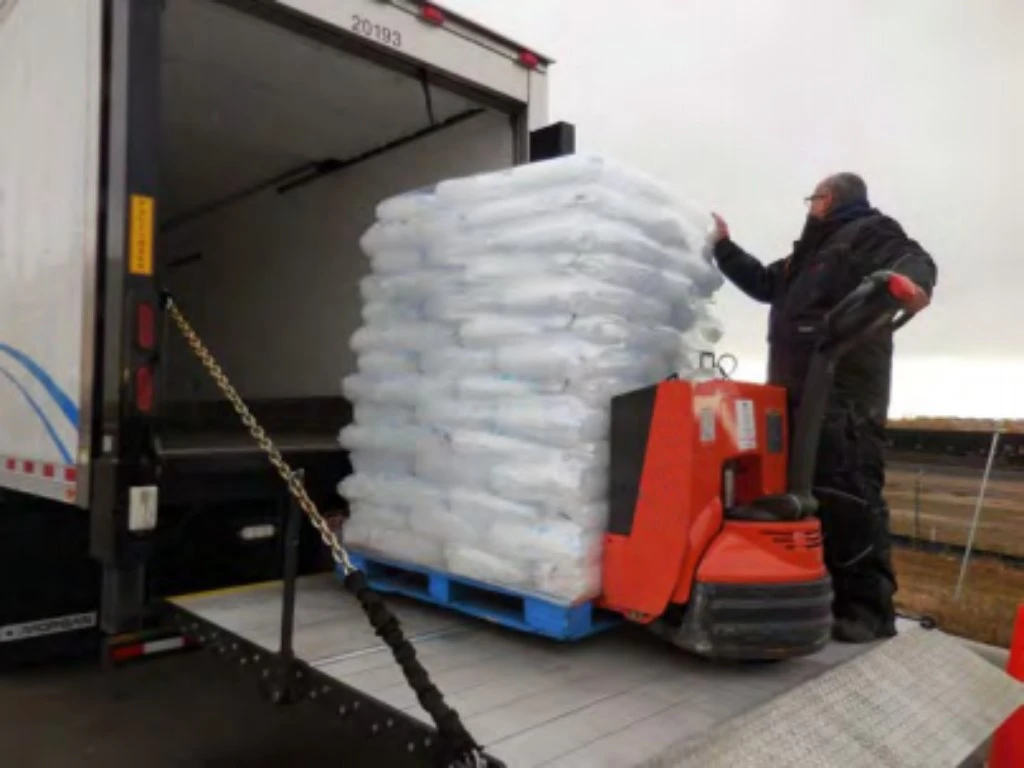
During peak outbound seasons, forklifts in frozen seafood warehouses operate continuously, shuttling between freezers, staging zones and loading docks. One procurement manager from a regional frozen seafood warehouse described a similar situation during peak shipping season. Their forklifts were expected to complete almost continuous pallet movements between the freezer and staging area for more than 14 hours each day. The issue was not lifting capacity-it was maintaining stable battery runtime without interrupting outbound schedules.
The true test of a forklift's performance lies not in occasional heavy lifting, but in hundreds of uninterrupted cycles of operation: driving, accelerating, lifting and lowering, pallet alignment, and palletizing stacking. Many buyers may think that a larger battery capacity equates to better performance when selecting a forklift. In fact, experienced warehouse managers will first evaluate factors such as aisle width, turning radius, charging infrastructure, and shift patterns before opting for a larger battery capacity. Although high-capacity batteries can extend operating time, they can reduce the maneuverability of forklifts in narrow aisles and high-density storage areas.
When selecting batteries, the focus should not solely be on the maximum capacity of the battery, but rather on finding a battery configuration that matches the actual operational workflow of the warehouse.
2. Thermal Cycling: The Most Underestimated Risk by Buyers
Many operators believe that the most severe test is the continuous operation of electric forklifts in low-temperature environments. However, in reality, frequently switching between hot and cold environments can lead to a greater maintenance burden. The basic workflow of the cold chain is: loading from the freezer to the loading dock, and then switching to the freezer work cycle.
In practice, repeated temperature transitions often create more maintenance work than continuous freezer operation because electrical connectors and exposed metal parts experience condensation far more frequently.
Condensation forms every time equipment crosses temperature boundaries. Warm, humid air contacts frigid equipment surfaces, depositing moisture on electrical connectors, wiring harnesses and metal structures. Over time, this triggers a series of problems: increased inspection workload, elevated component corrosion risk, more frequent maintenance and higher odds of unexpected breakdowns.
For warehouses with frequent freezer-to-loading-dock movement, buyers often evaluate sealed electrical connectors, higher IP-rated battery enclosures, low-temperature hydraulic oil, and corrosion-resistant wiring as a complete cold-storage package rather than treating each feature separately. Matching the protection level to the actual operating route usually delivers better long-term value than selecting individual upgrades.
For this reason, professional cold storage configurations avoid isolated retrofits; instead, they adopt integrated system solutions covering sealed electrical assemblies, corrosion-resistant fittings, low-temperature compatible lubricants and wiring protection systems.
3. Priorities for Forklift Specification Vary Across Cold Chain Verticals
Common Misconception: Assuming uniform cold storage configuration standards
Operational requirements differ drastically across applications.
The core requirement of frozen food warehouses is to ensure the continuous availability of forklifts to the greatest extent. Such warehouses generally feature fast pallet turnover, multiple shifts of operations, and strict requirements for outbound delivery time limits. When selecting a forklift, the focus is on evaluating three key indicators: battery endurance, charging support solutions, and warehouse layout. High-specification forklift solutions designed for cold storage are particularly beneficial in scenarios where equipment operates at high frequencies; however, if the frequency of warehouse operations is low, the investment recovery period for the entire solution will be correspondingly longer.
The core demand of food processing plants is to ensure uninterrupted production. Unlike independent storage warehouses, raw materials need to be continuously transferred between production workshops, cold storage, and finished product warehouses. Forklifts are themselves a crucial part of the production line.
In several food processing plants, forklifts spend only part of the shift inside freezer rooms before returning to normal-temperature production areas. This repeated temperature transition often becomes a greater maintenance concern than low temperature itself because condensation develops much more frequently.
Once the equipment stops, the transportation of raw materials and the delivery of finished products will be hindered, directly disrupting the entire production plan. In such scenarios, the moisture and corrosion resistance of forklifts is as crucial as the battery endurance performance.
The core requirement for pharmaceutical cold storage is stable and controllable equipment reliability. Pharmaceutical warehousing has strict specifications for the transfer of temperature-controlled goods. Any equipment failure will pose serious operational risks. When selecting equipment, focus should be placed on three major aspects: stable and consistent operational performance of the equipment, comprehensive after-sales maintenance support, and a clear configuration plan with full traceability.
The core of third-party cold chain logistics (3PL) lies in flexibly adapting to the operational needs of various customers. Third-party cold chain service providers serve multiple customers simultaneously, each with distinct cargo handling modes. When selecting forklifts, comprehensive considerations must be made regarding equipment utilization, fluctuations in daily workload, and fleet management systems.
4. Lithium-ion vs Lead-Acid Batteries: How to Choose
There is no universally optimal solution for all scenarios, and the decision on model selection needs to be based on the actual working conditions on site.
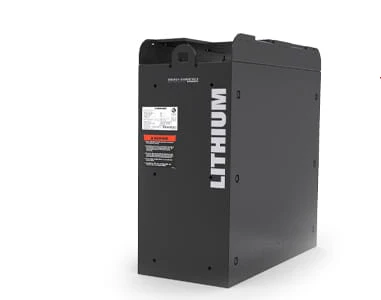
Lithium-ion batteries have multiple advantages in cold storage scenarios: they support opportunistic charging, require minimal routine maintenance, and allow flexible scheduling of charging periods. However, this does not mean that lithium-ion batteries are always the preferred choice.
Lithium batteries are more suitable for scenarios such as multi-shift warehouses, high pallet turnover, and limited idle downtime for charging.
Where multi-shift operation is common, lithium-ion batteries with opportunity charging and low-temperature heating functions may reduce battery changeovers while helping maintain forklift availability throughout the day. For single-shift warehouses with lower utilization, a conventional configuration may still provide sufficient value.
Traditional lead-acid batteries are still applicable: single shift operation, low equipment utilization rate, and sufficient dedicated charging time for the site.
Key decision criteria: operating environment temperature, daily operation duration, charging supporting conditions, and expected service life of the equipment.
5. Scenarios Unsuitable for Standard Cold Storage Electric Forklifts
A professional and reliable supplier should clearly inform customers of the applicable boundaries of their solutions.
Ultra-low-temperature environments
When the operating temperature falls below the standard range of conventional cold storage, a special assessment is required. Potential risks include accelerated battery capacity degradation and increased load on mechanical components.
Solution: Equip with a dedicated low-temperature battery system and enhance the overall vehicle protection configuration.
Frequent transit between outdoor areas and freezers
Forklifts continuously travel back and forth between the outdoor loading and unloading area and the cold storage. The core hazard is not low temperature, but condensed water vapor. It is prone to cause water vapor accumulation, corrosion of components, and electrical malfunctions.
Automated warehousing environments
The operations within automated three-dimensional warehouses are highly repetitive. Manual forklifts find it difficult to smoothly integrate with the fully automated operation system. Preferred alternative solutions include AGVs (Automated Guided Vehicles) and various robotic handling equipment.

6. Pre-Procurement Checklist for Cold Storage Electric Forklifts
Before finalizing the plan, the procurement team needs to comprehensively evaluate the on-site operational conditions.
Operating Environment
Actual temperature range, Daily forklift dwell time inside freezers ,Frequency of hot-cold transit cycles
Operational Requirements
Daily operating hours,Average daily pallet throughput, Number of working shifts
Equipment Configuration
Battery type, Electrical Ingress Protection (IP) rating, Mechanical structure compatibility ,Maintenance requirements, Local after-sales service capacity
Conclusion
Choosing the best cold storage forklift is not necessarily the model with the highest technical specifications. When selecting a cold storage forklift, one should not solely rely on the numbers listed in the sample data sheet. For instance, a 3-ton forklift equipped with a large-capacity battery may actually perform worse than a 2-ton forklift configured to match the working conditions. An ideal solution needs to align with the on-site temperature conditions, warehouse layout, operational intensity, charging planning, and maintenance expectations.
Senior cold chain operation managers generally agree on one principle: the reliable operation of a forklift does not depend on a single component, but rather on the complete system compatibility between the entire vehicle and the actual working conditions.
The question that cold storage operators need to consider should not be: Which forklift has the top technical specifications?
What truly deserves attention is: What kind of forklift configuration can ensure the continuous and stable operation of daily cold chain operations?