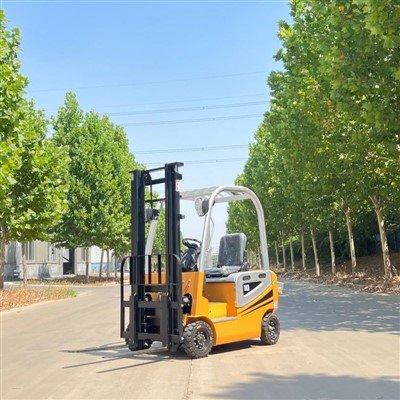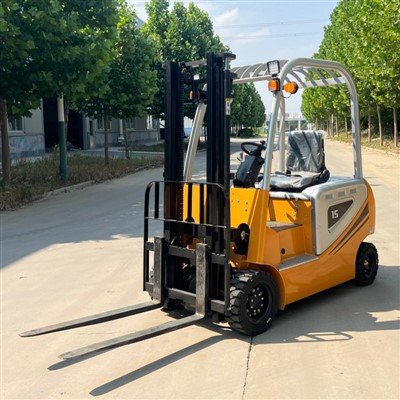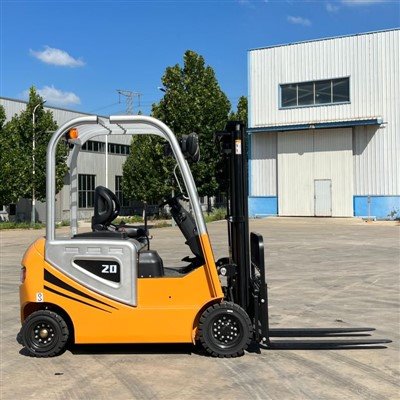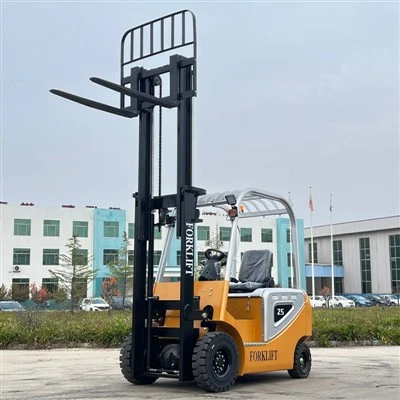
An electric forklift rarely goes from "fine" to "broken" without warning.
The signs are usually smaller: shorter battery runtime, altered brake feel, uneven tire wear, new mast noise, or minor seepage at hydraulic connections.
The truck may still run through the shift, so these small problems often get ignored and put off for later.A proper daily inspection is far more than a simple checklist.It should help answer a more practical question: what has changed, why has it changed, and does it need attention now?
Start With What the Forklift Is Doing Differently
Operators often spot abnormalities before technicians, since they know the forklift's regular behaviour. Trouble arises during shift hand-offs. One operator notes odd noises or reduced battery runtime, the next finds the machine still functional, and the observation gets lost.
Brief daily logging stops this from happening.At the start of each shift, check battery and charging status, tires, forks and mast, hydraulics, steering, brakes, and safety devices, plus any unusual noise or movement. Log the truck ID, hour-meter reading, and all deviations from normal operation.Operators do not need to diagnose faults. The goal is to surface changing conditions.
A consistently completed basic checklist delivers more value than an overly detailed form that only gets mindlessly ticked through during busy shifts.
What Should Be on an Electric Forklift Daily Checklist?
|
Area |
Check for |
If something has changed |
|
Battery |
Unusual runtime loss, charging behavior, cable or connector damage |
Record the change and check battery condition, charging practice and workload |
|
Tires |
Uneven wear, cuts, embedded material or abnormal wear patterns |
Look at floor condition, steering and travel routes |
|
Forks & mast |
Damage, unusual noise, uneven lifting or visible wear |
Arrange inspection if the condition repeats or affects operation |
|
Hydraulics |
Leaks, slow lifting, uneven movement or fork drift |
Assess the source rather than repeatedly topping up or replacing parts |
|
Brakes & steering |
Changed response, excessive play or unusual resistance |
Treat safety-related changes as an inspection priority |
|
Safety equipment |
Horn, lights, alarms, warning indicators and controls |
Correct faults before normal operation |
|
General operation |
New vibration, hesitation or unfamiliar sounds |
Record the symptom and compare it with previous observations |
The checklist is the starting point. It is not a substitute for technical inspection or the manufacturer's scheduled maintenance requirements.
When a Small Wear Pattern Becomes an Operational Problem
Take tire wear for example.A tire may retain enough tread to stay in service, making replacement feel unnecessary. Yet if wear stems from frequent sharp turns, poor floor conditions or narrow‑aisle operation, fitting new tires without fixing the root cause will only repeat the same issue.
Hydraulic leaks follow this same pattern. Minor seepage may not halt lifting right away, but continued use can turn scheduled maintenance into unexpected downtime.Costs extend beyond the broken part itself. During busy shifts, one out-of-service forklift slows pallet flow and forces remaining units to take on extra workload.This is why solid maintenance records track recurring patterns, not just isolated faults.
If one tire keeps wearing prematurely, examine travel routes and floor surfaces.If battery‑related complaints keep cropping up, review energy draw and charging practices.If mast issues re-occur after repairs, look at load profiles and past service history.
Repeating symptoms often tell you more than a single repair invoice.
Does Every Forklift Need the Same Service Interval?
A backup forklift and a three-shift production truck may look identical, but they do not accumulate wear at the same rate.
This became clear in a JTS Forklift Service case involving a regional distribution center operating 15–40 forklifts. The fleet had been affected by calendar-based servicing, limited hour tracking, harsh operating conditions and aging components. The maintenance strategy was changed to operating-hour-based scheduling, with heavy-use units placed on 150-hour intervals and backup units on 250-hour intervals. JTS reported a 25–40% reduction in total forklift downtime within six months.
Do not treat these interval numbers as a universal maintenance benchmark.The logic behind them is what counts. Actual running hours, duty-cycle intensity, manufacturer specifications and inspection observations make a far better service-planning foundation than applying identical schedules across every truck in the fleet.
The Warehouse Changes What You Need to Watch
Generic daily checks perform well for predictable indoor storage. Inspection priorities must shift as operating conditions change.
Narrow-aisle work
Minor shifts in steering feel, tire wear or mast movement carry greater risk where rack clearance is tight. A forklift may still finish its shift yet lose precision when placing pallets. For these setups, recurring tire wear, steering drift, mast play and contact scuffs merit closer monitoring.
Heavy-load operations
Frequent lifting and braking place higher stress on forks, mast assemblies, hydraulics, steering and brake systems. "Still running" is insufficient; inspections need to spot developing issues before they create loss-of-control risks under load.
Temperature-controlled warehouses
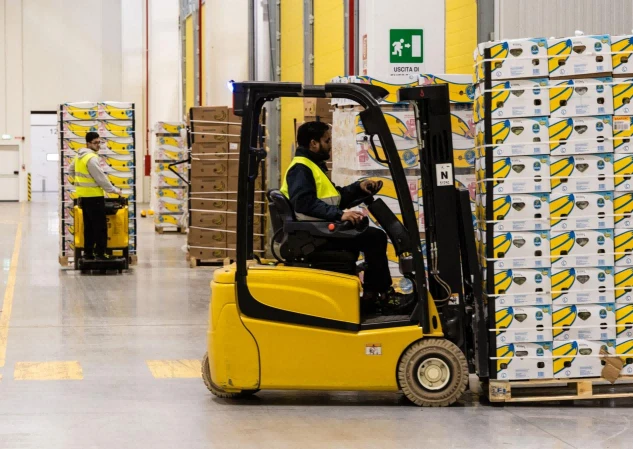
Chiquita's Cortenuova site in Italy serves as a practical real‑world example. The facility operates 7-days-a-week on 8-10-hour shifts at 14-18°C. Its ripening rooms have narrow, offset aisles, and high-level pallet handling brings lift cylinders near building structures.
The takeaway is not just more frequent inspections. Focus on components exposed to that specific workload: mast clearance, lift responsiveness, steering accuracy, and marks from repeated contact.
For colder or high-humidity locations, inspection protocols also need to address temperature swings, condensation and electrical safeguards. Your checklist should reflect real-world site conditions instead of defaulting to a generic "indoor warehouse" baseline.
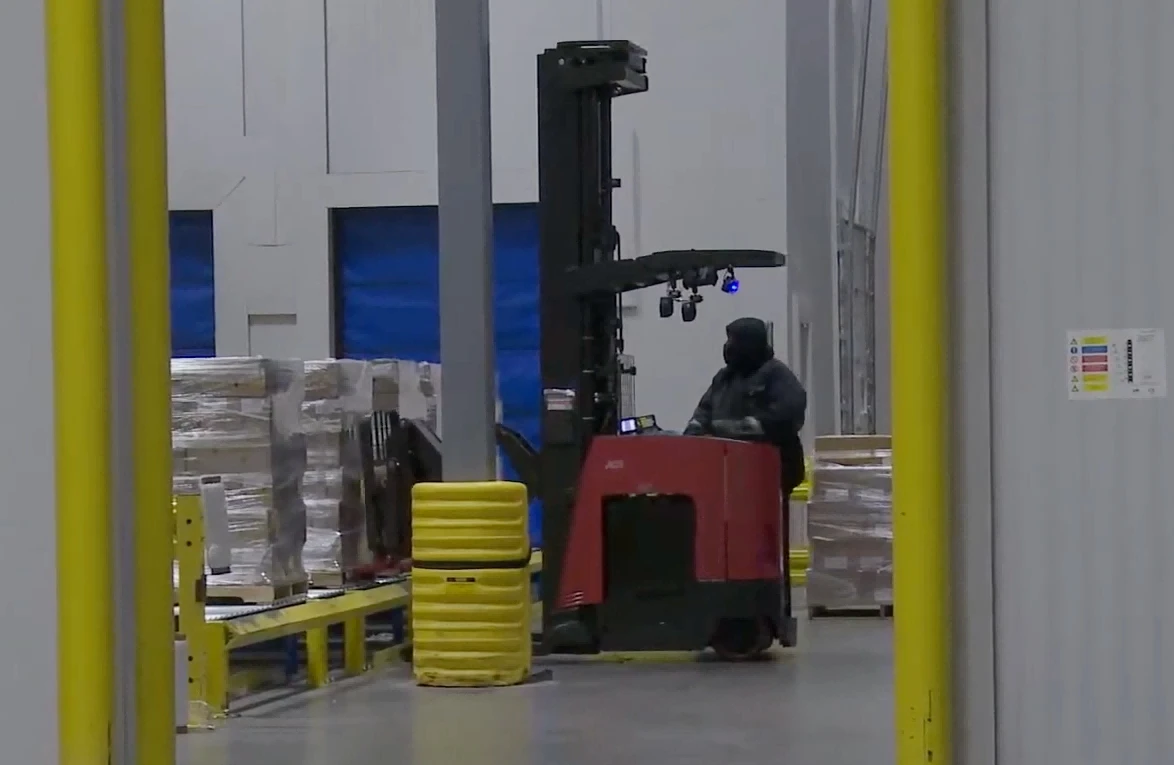
A Shorter Battery Runtime Does Not Always Mean a Bad Battery
Battery-related issues are often misdiagnosed. Operators who notice early power drain tend to assume the battery is faulty. While this is a reasonable guess, it is far from the only cause.
Toyota conducted a power study on a two-shift operation equipped with 935 Ah lead-acid batteries. The batteries offered 748 Ah of usable capacity, yet daily energy consumption averaged 1,380 Ah and peaked at 1,426 Ah, resulting in EBU values of 1.84 and 1.9.The core issue was not poor battery maintenance. The site's actual energy demand simply outmatched the battery setup's practical output.
This is a critical distinction. If your forklift consistently falls short on runtime, check battery health, charging performance, operating temperature and real workload first - do not default to more frequent servicing. Many battery symptoms stem from a simple mismatch between equipment capability and duty cycle, not faulty hardware.

When Should a Daily Finding Become a Maintenance Job?
Not every logged observation calls for the same action.
A minor one‑off change only needs documentation and ongoing monitoring. Recurring defects require focused technical inspection. Any brake or steering irregularity demands immediate attention, as these directly impact forklift operational safety.Repeated hydraulic fixes, persistent electrical faults, or ongoing battery complaints often signal root causes have not been resolved.
This marks the shift from simple checklist completion to active maintenance management.Follow this workflow:spot the change → log the detail → identify repeating patterns → pinpoint root cause → perform repairs or adjust your maintenance schedule.
When the same fault keeps coming back, swapping out the same component over and over is not a real fix.
Maintenance Can Extend Useful Life-But Not Indefinitely
Ageing forklifts bring a unique dilemma. A machine may still be mechanically repairable, yet grow increasingly costly to keep operational. More frequent repairs, prolonged downtime, hard-to-source parts and declining reliability eventually make continued maintenance uneconomical.
At this stage, the core question shifts entirely. Instead of asking how to keep the forklift running, teams need to evaluate whether keeping it operational delivers tangible economic value.
A structured repair-or-replacement assessment works far better than simply servicing aging equipment and hoping issues resolve. The JTS case study also proves maintenance records serve a greater purpose than supporting immediate repairs. They reveal recurring faults, downtime trends and overall fleet reliability to guide smarter long-term decisions.
Keep the Checklist Simple. Make the Decisions Specific.
Daily electric forklift inspections do not need to turn into lengthy manual checks. They only need to capture meaningful operational changes:
Abnormal battery performance that deviates from regular shift patterns; Tire wear indicating route or floor condition issues; Recurring mast and hydraulic abnormalities; Changed braking or steering response; Malfunctioning safety devices; Unusual noise, vibration or irregular operating behavior.
Your maintenance plan should then adapt to each forklift's real conditions: shift schedules, operating hours, load intensity, warehouse environment, equipment status and remaining service life.
This is what makes daily checklists effective for long-term fleet health. It cannot eliminate every equipment failure, but it equips your team to address minor changes early, before they escalate into costly operational downtime