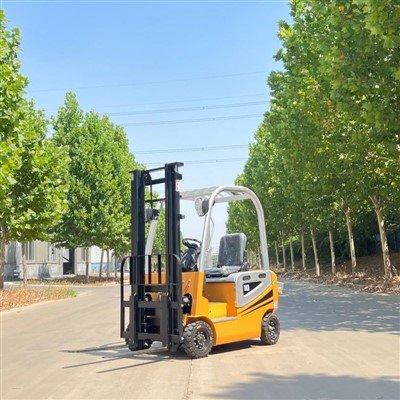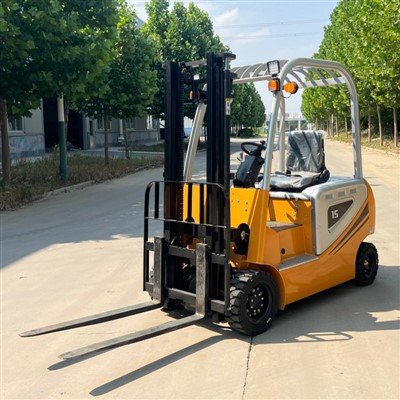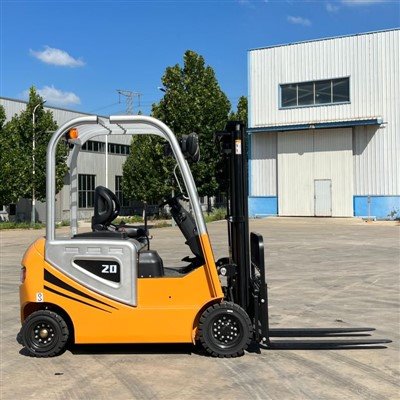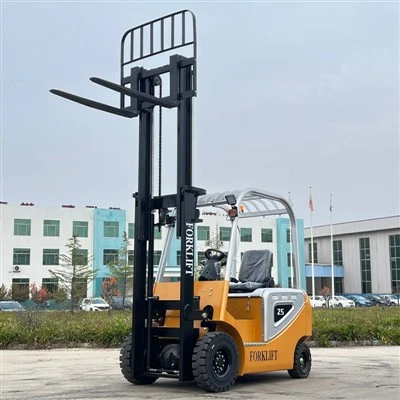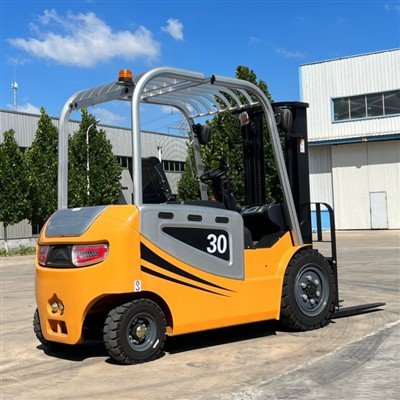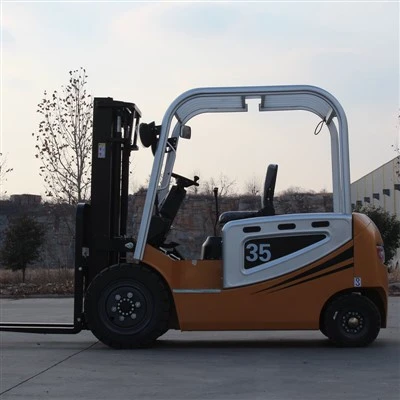
A 5,000 lb forklift rated at a 24‑inch load center looks straightforward on a quote sheet - yet it is widely misunderstood.
Many buyers assume a 5,000 lb-rated forklift can safely lift any 5,000 lb load. That can be true for a conventional pallet handled within the rated conditions. It becomes less certain when the load is long, uneven, lifted to a high rack, or handled with an attachment.
The forklift's headline rated capacity does not tell the whole story - its usable capacity depends on the actual working configuration and conditions.This is why forklift capacity is never just a number. It always depends on your specific application.
What Does a Forklift Capacity Rating Actually Mean?
A forklift's rated capacity is tied to a specific load center, lift height and equipment configuration.
OSHA's forklift nameplate guidance offers a clear example. A forklift rated 5,000 lb at a 24-inch load center with standard forks drops to 4,500 lb with a sideshifter fitted, with corresponding lift heights listed on the nameplate.
Crucially, this does not mean a sideshifter always reduces capacity by 10%. Capacity changes vary by machine.The core rule is simple: rated capacity only applies to the forklift's exact, fitted configuration.This same logic applies to your loads. OSHA confirms forklift capacity is calculated around a standard load center. Oversized, irregular, off-center loads, or loads positioned beyond the rated distance, will lower real lifting capacity.
This shifts the key buying question away from the generic: "How much can this forklift lift?"The right question is: "What is its effective capacity for my unique load, load center and required lift height?"This perspective uncovers far more value than relying solely on headline capacity figures.
Why 5,000 lb Does Not Always Mean a 5,000-lb Load Is Suitable
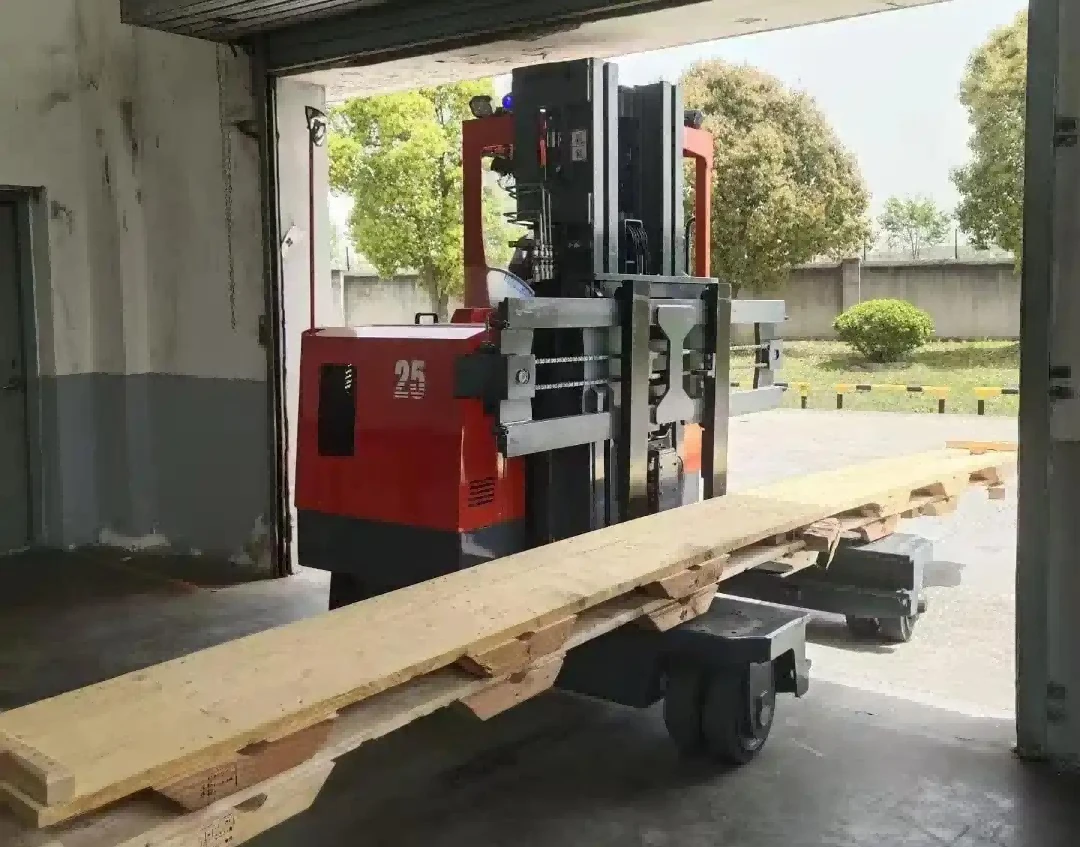
Imagine two separate loads, each weighing 4,500 lb.The first is a compact pallet, with its weight sitting near the standard load center.The second is a long steel component extending far past the fork tips.The scale reads identical weights, yet the forklift sees two very different loads.
Moving the load center forward raises the load moment. OSHA demonstrates this with a 4,500‑lb load: at a 24‑inch load center, load moment equals 108,000 inch‑pounds. At 30 inches, that same load generates 135,000 inch‑pounds.This is why load weight and load center must always be evaluated together.
Load centers tend to be predictable for standard pallets.They become far less clear with molds, dies, machine parts, steel sections, castings, long timber and other irregular loads. Total weight may be well‑documented, but the real centre of gravity is often hidden.
Suppliers cannot reliably recommend a forklift based only on a "maximum load: 5,000 lb" figure.The physical shape of that 5,000‑lb load makes all the difference.
A Real OSHA Accident Shows What Goes Wrong
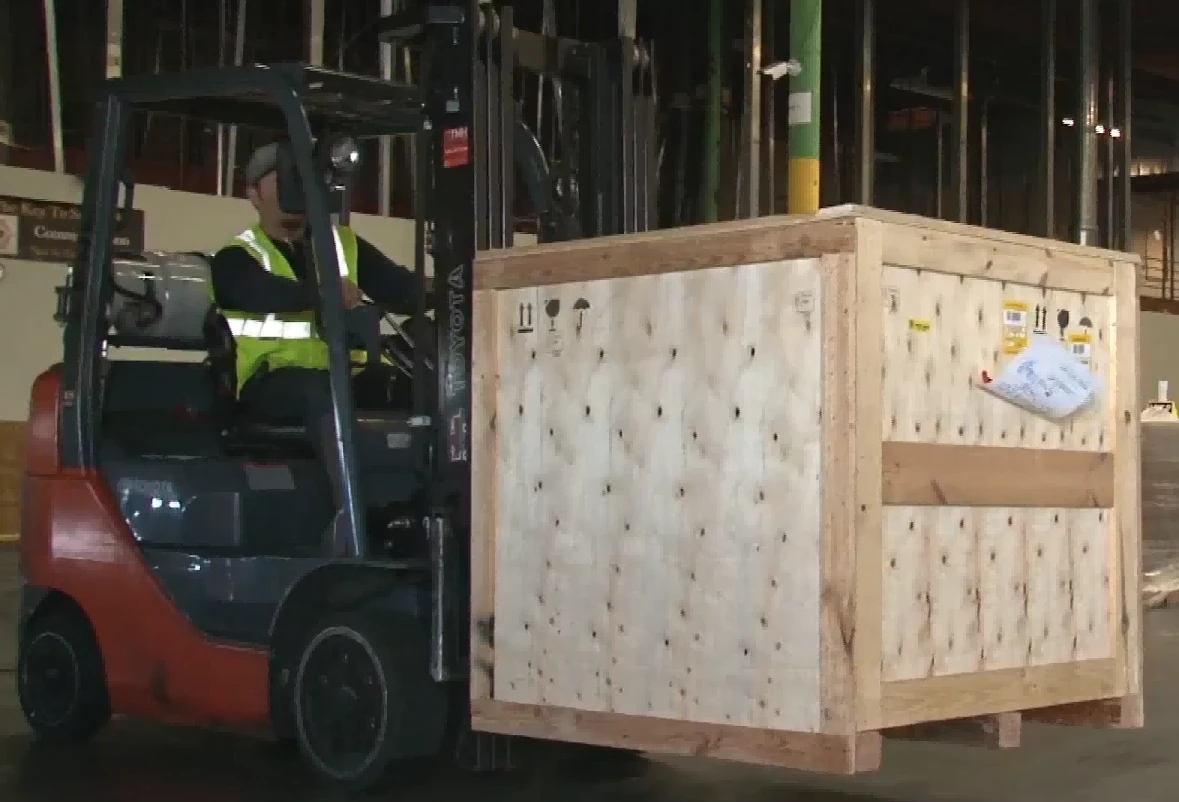
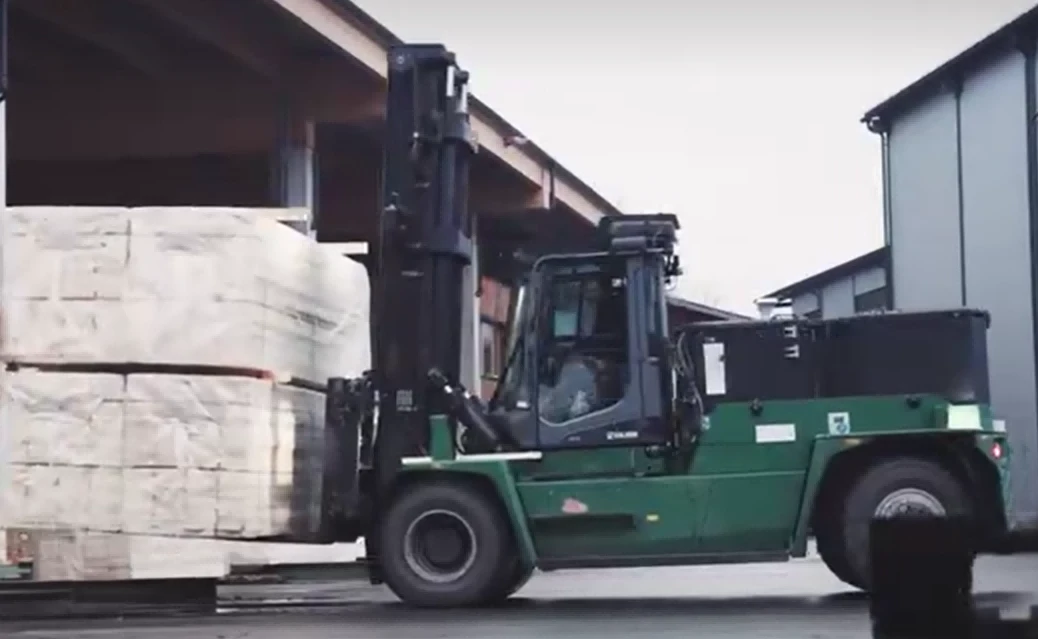
An OSHA investigation at a Menards facility provides a useful example.The Toyota forklift onsite had a rated 4,300-lb capacity at a 24-inch load center. Workers attempted to lift a 16-foot ponderosa pine bundle - 3 ft high, 4 ft wide and weighing 5,450 lb - to a 12-foot storage rack. At roughly 8 feet of lift height, the oversized load tilted and shifted, destabilizing the forklift and causing a fatal overturn. OSHA cited exceeded load capacity, unknown exact load weight, poor load stabilization, and limited team understanding of load center rules as key contributing factors.
The surface-level takeaway is simple: the forklift was overloaded.For procurement teams, the far more critical lesson is that load weight alone never defines safety or compatibility. Load dimensions, positioning, stability and lift conditions all play a vital role.
If your site regularly handles long or irregular loads, relying on on-site operators to judge risk during busy shifts is unreliable. The right approach is to define all unique handling conditions before purchasing new equipment.
Should You Simply Buy a Larger Forklift?
Sometimes, yes.When real‑world loads surpass a truck's rated capacity for your operating conditions, stepping up to a higher‑capacity forklift may be necessary.
Still, a bigger forklift will not solve every capacity‑related issue.Take long loads with a far‑forward load center as an example. First assess whether you can reposition the load, use better‑suited fork sizes, or adopt another approved handling setup.If issues only occur at high rack heights, verify the rated capacity at that exact lift height.
For narrow aisle warehouses, a larger standard counterbalance unit can introduce new challenges, worsening turning and load positioning.Lodge Manufacturing provides a relevant real world example. Its distribution center deployed multiple forklift models for distinct tasks: Crown TSP VNA trucks for heavy cast iron cookware within narrow high bay storage, RC stand up units for dock work and stock replenishment, and MPC trucks for order picking. Equipment was matched to each job, instead of expecting one forklift to cover all operations.
The practical takeaway is clear:Identify your actual operational limitation before upgrading capacity numbers.
Load Center Becomes More Important as the Load Becomes Less Standard
A standard 48-inch deep pallet with evenly stacked goods delivers a highly predictable load center. The same cannot be said for awkward, custom loads.
Molds can be heavier on one end, steel beams can extend past standard fork reach, clamps can shift loads forward, and unbalanced cargo can concentrate weight on one side of the forklift. These are not trivial differences when a machine operates near its rated limit.
OSHA explicitly requires operators to evaluate every load's weight, size, position, distribution and balance, and keep loads positioned as close to the front wheels as possible.This exposes a common procurement misconception: assuming a load is safe simply because it falls under the forklift's headline capacity rating.This is not always true. The only valid measure is whether the load stays within rated capacity under your actual load center conditions.
Lift Height and Attachments Can Change the Answer
A forklift may handle a load safely at floor level, yet lose usable capacity when lifting the same weight to higher rack positions.
Both mast design and fitted attachments directly impact real-world capacity. OSHA's nameplate guidelines clearly differentiate ratings for standard fork setups versus units equipped with sideshifters. OSHA also confirms attachments alter a forklift's center of gravity, operator visibility and lifting capacity, prohibiting operation beyond the combined truck-and-attachment rated limit.
This makes the forklift's final, delivered configuration critical. If a quote lists one specification, but the delivered machine has a different mast, fork setup or attachment, the original capacity assumptions no longer apply.OSHA mandates any modification affecting capacity or operational safety must gain manufacturer approval, with updated capacity labeling to match the new configuration.
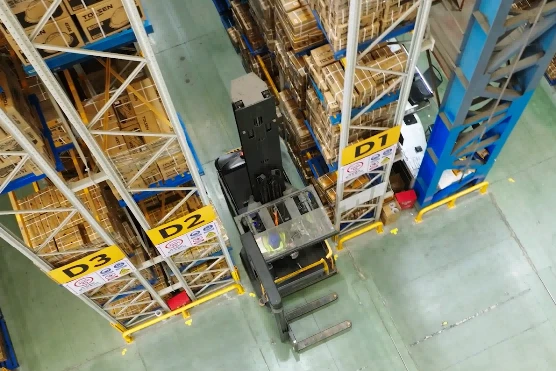
High-Bay and VNA Warehouses Need More Than a Capacity Number
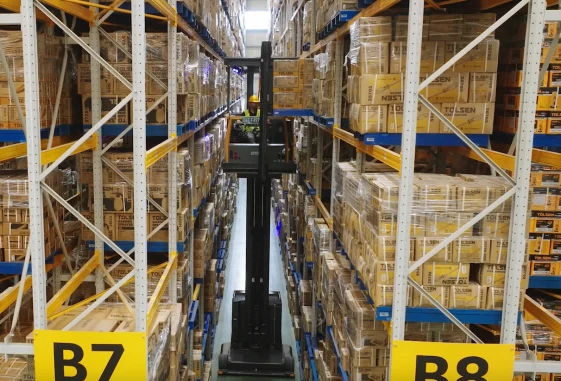
High-bay storage introduces a key variable: forklifts must retain stable, rated performance at full lifting height, not just floor level.
Tolsen's warehouse serves as a strong real-world example. The site features ultra-narrow aisles and 14.2-meter-high racks, holding nearly 16,000 pallet positions. The facility deployed Crown TSP turret trucks, with mast specs and guidance systems fully aligned with its overall warehouse layout.This does not mean every high-bay site requires turret trucks. It simply proves lift height, aisle dimensions and truck configuration must be evaluated as a whole.
A capacity number taken from a brochure without checking the actual mast and operating height is not enough.
What Should Be Confirmed Before Ordering?
BeBefore comparing forklift pricing, first define your actual operational requirements. At a minimum, share the following details with your supplier:
Maximum and typical load weight; Load overall dimensions; Exact load center distance; Load distribution and center of gravity; Required maximum lifting height; Mast configuration; Fork dimensions; Attachment type and weight; Aisle and rack specifications; Floor and working environment conditions; Daily shifts and load handling frequency.
Then ask the supplier to confirm the applicable capacity for the final configuration, rather than simply quoting the truck's maximum nominal rating.This step is critical for operations involving long loads, heavy industrial components, high-bay storage, VNA aisles or frequent attachment use.Standard pallet handling at moderate lift heights is usually easy to assess. However, irregular loads that push the forklift's limits at full lift height require far more careful verification.
The Real Meaning of Forklift Load Center
Load center is often viewed purely as a figure on a forklift data sheet.
In real‑world operation, it describes where a load's weight acts relative to the forklift itself.Push the load forward, and load moment shifts.Raise lift height, and operating conditions alter.Fit an attachment, and the machine's configuration changes.Switch from spacious indoor floors to narrow high‑bay aisles, and equipment requirements may shift once more.
None of these invalidate the original capacity rating. They merely set the boundaries for when that rating holds true.This explains why "buy the largest available forklift" is seldom the safest purchasing call.Instead, map out your real‑world loads and operating conditions first, then verify that the proposed forklift's published capacity covers those exact scenarios.
A 5,000‑lb‑rated forklift is not a one‑size‑fits‑all 5,000‑lb solution. Its usable capacity only counts when valid for your actual load center, lift height, equipment setup and site conditions.