A forklift that seems ideal at the time of purchase can turn into an uneconomical choice just a few years down the line. This does not always mean the original buying decision was wrong.
Warehouse operations may expand to longer shifts, load profiles can shift, and battery consumption demands may rise. A forklift originally bought to cover seasonal peak workloads may sit idle for most of the year. Routine maintenance may still be affordable, yet a single breakdown can now halt critical production lines - lines that were far less time-sensitive when the fleet was first deployed.
This is where forklift Total Cost of Ownership (TCO) becomes useful.
In practice, however, TCO is often simplified into a basic five‑year spreadsheet that only accounts for purchase price, fuel expenses, and routine maintenance. This approach overlooks a far more critical question:
What has changed between the original operating conditions that guided forklift selection and the real-world workflow today?
This single question often determines the most practical next step: whether to retain the unit, repair it, reconfigure the fleet, or invest in a replacement.
The Purchase Price Is Usually the Easiest Cost to See
A forklift quotation is clear.The long-term cost is not.
A credible TCO calculation must factor in full lifecycle expenses: total acquisition cost, energy consumption, batteries and charging infrastructure, maintenance, wearable parts, labor hours, unplanned downtime, and residual asset value.
The challenge is that these costs do not increase uniformly. A forklift may operate smoothly for its first two years. Yet as operational patterns shift or component wear builds up, hidden expenses begin to emerge - costs that were not apparent during the initial purchasing stage.
Take fleet size as an example.
One U.S. food and beverage distribution operation was running more than 135 trucks. After analyzing fleet and energy data, the company reduced the fleet to 75 trucks while maintaining operational volume. The case reported $1.12 million in savings over 18 months and 484,000 additional pallets moved in the first year.
The interesting part is not simply that fewer forklifts cost less.
The audit revealed the original fleet was running far below its actual efficiency potential.
This difference is critical to understand. An underutilized forklift still carries ongoing overheads. Depreciation, insurance, routine maintenance, fuel or battery fees, and storage expenses persist even when the machine sits idle for most of the workday.
For a fleet manager, utilization should therefore be checked before adding more equipment.
When the Forklift Is Not the Problem, Look at the Energy System
Many businesses simplify electric forklift TCO down to a question: how much does electricity cost per unit?
This narrow view falls short for high-utilization operations. Real long-term costs are shaped by battery capacity, daily operating hours, available charging windows, battery swapping frequency, charger accessibility, and long-term replacement cycles.
Toyota documented a useful case involving a customer running two 10-hour shifts with a 935 Ah lead-acid battery. Its usable capacity was 748 Ah. A two-week power study measured average daily consumption of 1,380 Ah and a peak of 1,426 Ah.
On the surface, the issue seemed to be degraded, aging batteries. However, operational data pointed to cause: the site's energy setup was mismatched with its actual duty cycle.
Toyota's recommendation was clear: each forklift needed either dual lead-acid batteries or an alternative energy solution such as lithium-ion technology.
This delivers a far more valuable TCO lesson than simply comparing upfront battery prices. A lower-cost battery often brings hidden overheads from frequent swaps, extended charging downtime and extra labor work - factors its sticker price never reflects.
The correct evaluation question is: Can your energy system fully support your real shift schedule, without creating unintended downstream operational costs?
Electric, Diesel or LPG: The Workload Should Make the Decision
No single powertrain delivers the lowest five-year TCO in every scenario. The optimal choice depends on where the forklift operates, how intensively it works, and which operational costs your business prioritizes.
Electric forklifts
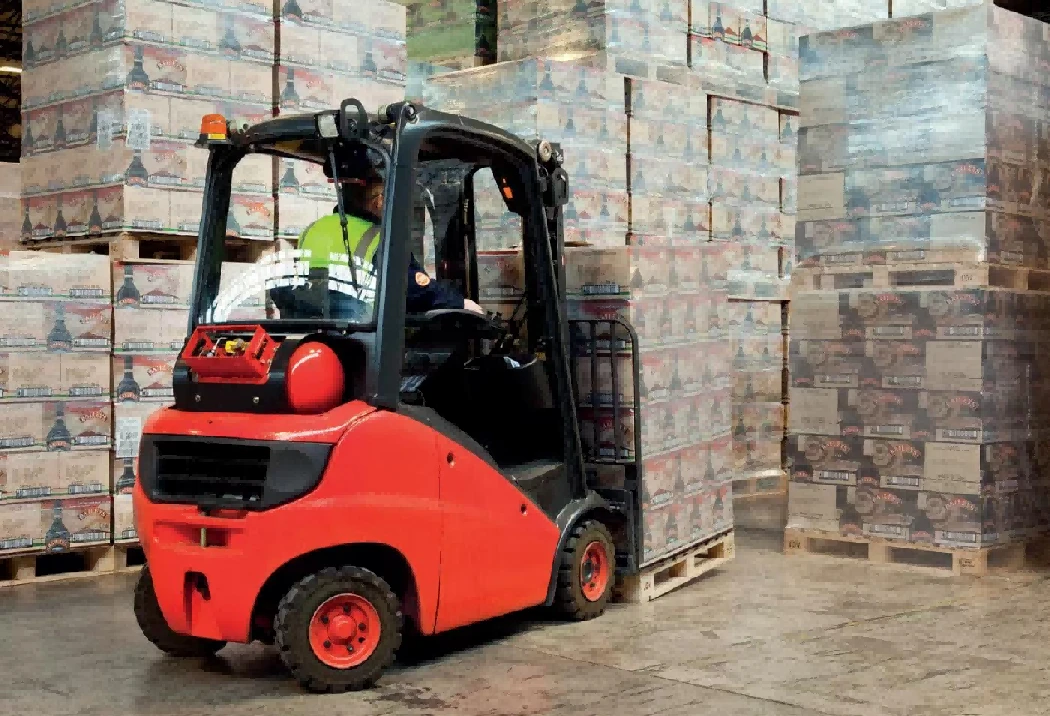
Electric forklifts excel in indoor warehouses, food processing facilities, and worksites that prioritize zero emissions, low noise, and clean working environments. However, high operational utilization shifts the cost calculus entirely.
Long charging cycles and frequent battery swaps can offset energy savings, resulting in lost runtime and extra labor overhead.
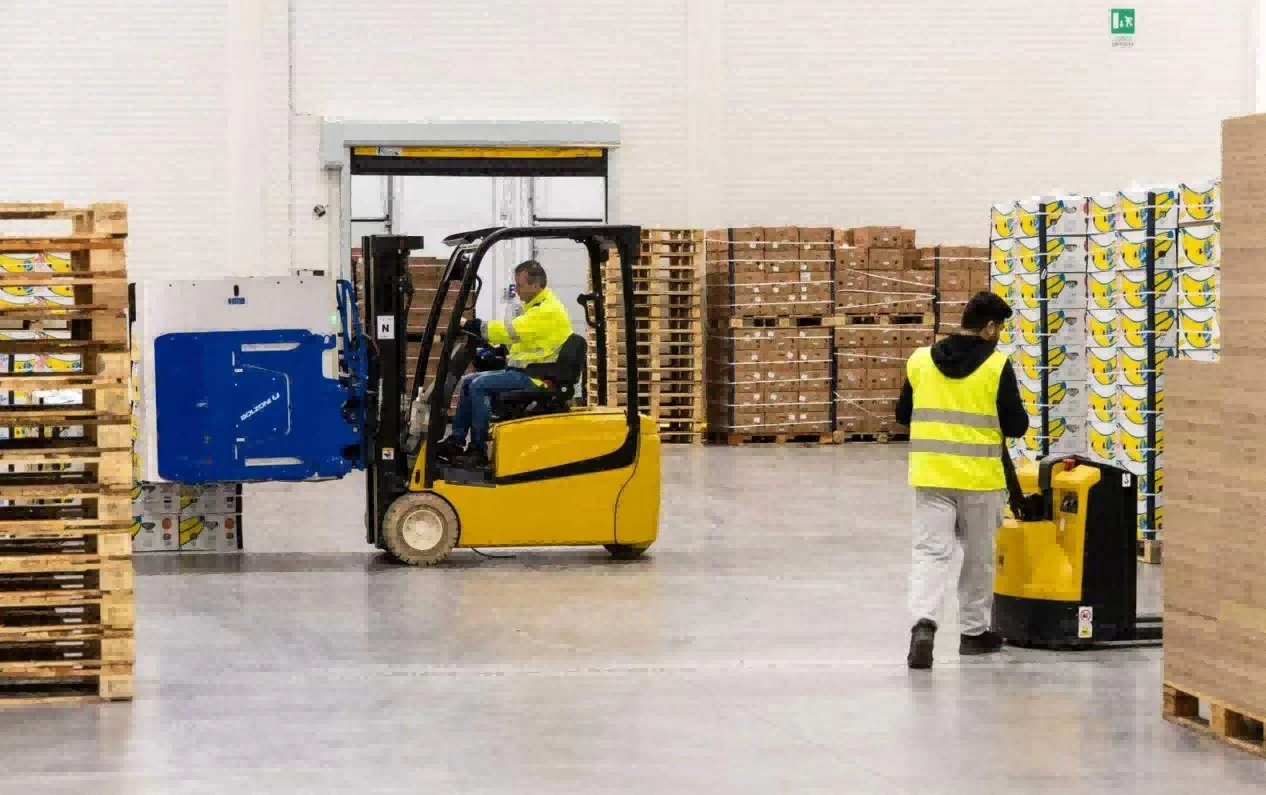
The Chiquita banana facility in Italy offers a great real-world example of operation-led fleet design. Its temperature-controlled site features narrow, offset aisles, multiple loading docks, and rigorous pallet-handling demands. Instead of relying on a single forklift model for all tasks, the site deployed a mixed fleet of electric counterbalance forklifts, pallet trucks and order pickers.
This highlights a key principle: the lowest TCO comes from a well-matched fleet layout, not simply a cheaper individual forklift unit.
Diesel forklifts
Diesel forklifts remain highly practical for demanding outdoor tasks, extended shifts, heavy loads, and any operation that requires fast, convenient refueling.
Cost issues arise when heavy-duty diesel equipment for light-duty work. When only part of your fleet handles heavy outdoor loads, standardizing every unit to the same heavy-duty specification for indoor use drives up purchase, fuel and maintenance costs - with no tangible operational benefit.
LPG forklifts
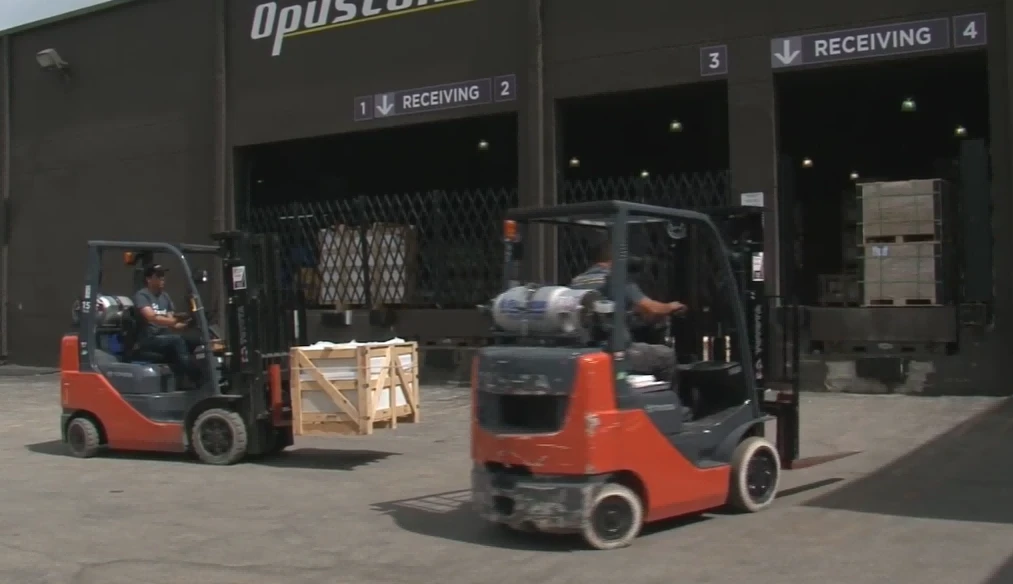
LPG becomes interesting when refueling speed is more important than charging infrastructure.
Diageo provides a useful example. Its electric fleet required long charging periods, while battery changes could take up to an hour and added labor to the operating process. The company moved to LPG forklifts and bulk-gas refueling to remove that bottleneck.
This case does not prove LPG is universally cheaper than electric power. It reinforces a core rule: your energy system must align with your operational pace.
The Cost of Downtime Is Often Missing From the Spreadsheet
Maintenance invoices are easy to track and record. Lost production costs, however, rarely show up on standard cost sheets.
Suppose a forklift in a general storage warehouse stops for two hours. Another truck may take over.The same two-hour outage at a production plant can disrupt material supply, delay outbound loading, and force inefficient workarounds for the entire team.
The repair cost may be identical in both scenarios, but the overall business impact is vastly different.
This is why downtime must be calculated as a core TCO variable, not viewed as just an occasional maintenance mishap.
A practical formula to follow is:Downtime Cost = Lost productive hours + backup equipment / labor expenses + secondary operational losses
Exact figures always depend on on-site conditions. There is no one-size-fits-all hourly downtime cost, because every facility relies on forklifts in different ways.
For procurement managers, this is where after-sales support directly adds tangible value. A forklift with a slightly higher upfront price can deliver better long-term economics when it benefits from local parts availability, reliable service response, and fast turnaround on common repairs.
Fleet Size Can Be More Important Than Forklift Efficiency
This is one of the areas where TCO analysis can change a purchasing decision completely.
A company may be looking for a more efficient forklift while the real problem is that it owns too many forklifts.
The hagebau Logistik case involved around 200 trucks across five sites. Fleet analysis identified underused or incorrectly specified equipment, and the core fleet was subsequently reduced by 20%, while additional equipment remained available for seasonal peaks.
That creates a useful way of thinking about fleet capacity:
permanent operational demand requires dedicated equipment, but peak seasonal demand does not always need permanent fleet assets.
When maximum forklift numbers are only needed for a few weeks or months annually, renting or adopting flexible capacity strategies often delivers far better TCO than owning idle equipment year-round.
This matters greatly for procurement teams, as fleet size impacts far more than upfront purchase costs. It also dictates ongoing overheads including:
maintenance contract scope; battery inventory volume; required charging infrastructure; operator staffing allocation; on-site storage space; annual asset depreciation; spare equipment reserves.
In many cases, removing one redundant forklift delivers greater cost savings than improving the fuel or energy efficiency of ten active units.
An Old Forklift Does Not Become Expensive Just Because It Is Old
Equipment age serves as a helpful warning indicator, but it should never be the sole reason for replacement.
An older forklift can remain financially sensible when annual utilization is low, repairs are predictable, spare parts are available and downtime has little operational impact.
The business case shifts when multiple issues start occurring at once:
steadily rising repair frequency; unpredictable and unplanned downtime; aging major components nearing end-of-life replacement; hard-to-source spare parts; declining operational productivity; outdated equipment specs that no longer match current workflows.
AP Exhaust Products offers a useful real-world example.
The company had been using refurbished equipment, but maintenance costs had become increasingly difficult to control. After reviewing its fleet, it replaced the older mixed fleet with new electric equipment and reduced fleet size by 15% in the distribution center and 28% in the plant. Paired with a standardized maintenance program, the site reduced overall maintenance costs by 35–45%.
The key takeaway is not simply that new forklifts are cheaper to run. The measurable improvement came from optimizing multiple factors at once: fleet sizing, equipment matching, structured maintenance, and streamlined energy management.
This holistic optimization is exactly what a proper TCO-focused decision should achieve.
What Should Actually Go Into a Forklift TCO Model?
Once you fully map out real world operating conditions, the TCO calculation itself becomes fairly straightforward.
Acquisition
Account for the full upfront investment: forklift, battery, charger, attachments, freight, commissioning, and supporting infrastructure.
Energy
Draw on real-site consumption data whenever you can.
Annual energy cost = actual consumption × local energy price
Avoid leaning solely on rated fuel or power figures if you already have historical on‑site operating data.
Maintenance
Track: scheduled maintenance, unplanned repairs, spare-parts, replacements tire wear, technician labor, service contracts.
Downtime
Estimate the cost of lost operating hours and any replacement equipment or labor required to keep production moving.
Labor
Include measurable time spent on: battery changes; charging; refueling; inspections; maintenance coordination.
Residual value
Deduct the projected resale or trade-in value at the end of your ownership cycle.
This yields a practical working formula:
TCO = Acquisition + Energy + Maintenance + Infrastructure + Downtime + Labor‑related Cost − Residual Value
One critical step is often missed. Don't only compare total spend in raw dollars. Where data allows, also compute:TCO per operating hour or TCO per pallet moved.
The Four Possible Answers After a TCO Review
A good TCO analysis should not automatically end in a purchase recommendation.
There are four legitimate outcomes.
Keep
The forklift still suits the application, utilization levels are reasonable, and ongoing operating costs stay predictable.
Repair
Cost issues stem from a single failing component, yet the machine itself remains well‑suited for the work it performs.
Reconfigure
This outcome frequently gets overlooked.
Possible adjustments include:
additional battery capacity; improved charging set‑ups; fleet redistribution; updated maintenance coverage; temporary equipment for peak-period demand; specialist trucks for specialist tasks.
The Toyota case offers a good illustration of this point. The machines remained mechanically functional, yet their battery setup could not keep up with real‑world energy demand. Reworking the energy system addressed the root issue more effectively than purchasing another standard forklift.
Replace
Replacement makes business sense when the fleet develops systemic cost‑driven issues:
unpredictable maintenance expenses; rising downtime frequency; falling productivity; key components nearing end-of-life; growing difficulty sourcing spare parts; original specifications no longer align with current operations.
The key distinction: replacement should fix an actual cost problem, not just address the age of equipment.
How Procurement and Operations Should Read the Same TCO Differently
Operations managers evaluate TCO from a daily operational perspective. They focus on real-time on-site performance:
Is the forklift ready for use at the start of each shift?
Does the battery last through full working hours?
Can the unit handle loads without slowing down operators?
How frequently does the forklift break down?
How much working time is lost waiting for maintenance?
By contrast, procurement and finance teams assess the same equipment from a financial and strategic standpoint:
Are long-term equipment costs predictable?
Is the fleet sized appropriately for actual demand?
Will the equipment require additional new infrastructure?
How clear and transparent are ongoing maintenance expenses?
How much capital is locked up in underutilized assets?
What residual value will the forklift hold at the end of its service life?
Neither viewpoint alone delivers a complete picture. A forklift with a low upfront cost can still be a problematic choice for daily operations. Similarly, a high-performing on-site machine may bring unnecessary capital pressure for the procurement team.
A sound TCO-based purchasing decision must balance and satisfy both operational and financial needs.
Before Signing the Next Forklift Order, Check These Five Things
Before jumping straight to quote comparisons, start by assessing your actual on-site operations.
1. Actual utilization
How many hours is each forklift really working?
2. Duty cycle
How many shifts are running? What is the travel frequency, load specification and working environment?
3. Energy demand
Can the battery, charger, fuel system or refueling arrangement support the real workload?
4. Downtime exposure
What financial and operational losses occur when a critical forklift goes offline?
5. Fleet capacity
Are you purchasing for steady daily demand, or permanently owning equipment only needed for seasonal peak periods?
These five checks uncover far more actionable insights than simply comparing basic forklift prices side by side.
Final Takeaway
Long-term forklift cost issues rarely stem from a simple failure to calculate five-year purchase expenses. Most TCO problems arise when equipment, fleets and operational systems gradually fall out of alignment with actual on-site workflows.
Warehouses extend operating shifts, batteries can no longer keep up with daily duty cycles, seasonal temporary fleets become permanent assets, and aging forklifts start consuming excessive maintenance hours.
A breakdown that once caused minimal disruption can now halt entire production lines. These are the subtle shifts that reshape total ownership costs over time.
Before replacing any forklift, ask three critical questions:
Is the individual machine still suited for its daily tasks?
Is the overall fleet size matched to real operational demand?
Are energy and maintenance systems aligned with how the equipment actually operates?
Only with these answers in place can a five-year TCO comparison deliver accurate, meaningful results.
The lowest-TCO forklift is not always the model with the lowest upfront price. It is the equipment and fleet configuration that consistently delivers required output with minimal avoidable costs throughout its service life.