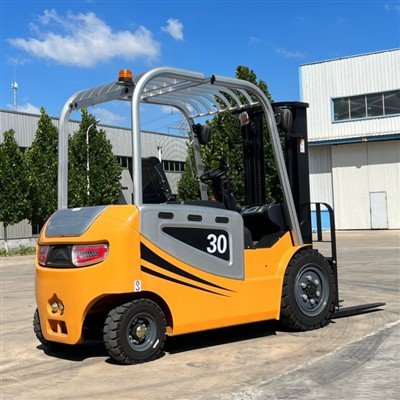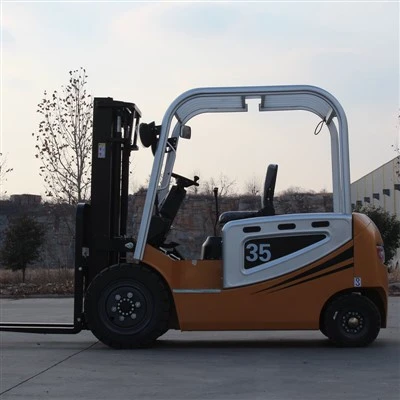
The steel manufacturing industry is one of the most demanding industrial sectors for material handling equipment. Unlike standard warehouse logistics, steel factory operations involve ultra-heavy raw materials, extreme working environments, and non-stop production schedules that leave zero room for equipment failure. Steel coils, metal billets, steel plates, and thick steel pipes are the core products of steel mills, all featuring super weight density, rigid structures, and residual high temperature after production. These harsh working conditions make ordinary industrial forklifts completely incompetent for daily handling tasks.
As a senior overseas project manager specializing in heavy-duty material handling equipment with over 10 years of experience, I have participated in dozens of customized forklift solution projects for heavy industries. Most steel factory clients face identical operational pain points: insufficient load capacity of original handling equipment, frequent downtime caused by high temperature and heavy dust, low overall handling efficiency, soaring maintenance costs, and prominent safety risks during heavy-load operation. A mismatched forklift solution will not only restrict the factory's production and shipment efficiency but also trigger potential safety hazards and increase long-term operational expenditures.

I still remember when I received the official project inquiry in February 2026 from a large-scale steel manufacturing company located in Johannesburg, South Africa. This client is a local mainstream comprehensive steel factory focusing on the production and processing of carbon steel and alloy steel products. After in-depth communication and on-site investigation, I fully understood the tough handling challenges they had been struggling with for a long time.
First, let me introduce the client's basic factory operation scale and working environment. This steel factory covers an area of over 80,000 square meters, with a daily output of 1,200 tons of finished steel products, including steel coils, 6-12 meter steel plates, solid metal billets, and thick-walled steel pipes. The entire factory adopts a 3 shifts per day non-stop production mode, with on-site handling operations running 24 hours a day. The working environment is extremely harsh all year round: the production workshop and finished product warehouse are exposed to continuous high temperature radiation from steel products, with on-site operating temperatures often exceeding 45°C. Meanwhile, steel cutting, polishing and blanking processes produce a large amount of metal dust and tiny steel debris, forming a high-dust working environment that poses severe tests for mechanical equipment and hydraulic systems.
Before cooperating with us, the client relied on two 12-ton ordinary diesel forklifts and fixed gantry cranes for all heavy material handling work. However, the original equipment configuration had obvious functional defects and could no longer adapt to their expanded production capacity. The most prominent problem was insufficient load capacity. A single finished steel coil and bundled thick steel plates often reach 16-19 tons, far exceeding the safe load range of their original 12-ton forklifts. Operators could only adopt segmented handling and split loading methods, which greatly reduced logistics efficiency and seriously delayed the factory's finished product delivery cycle.
In addition, the ordinary forklifts were not designed for high-temperature and high-dust steel factory working conditions. After a short period of operation, the equipment frequently failed: the hydraulic system was prone to oil leakage and pressure instability under long-term high-temperature radiation, the engine heat dissipation efficiency decreased sharply in summer, and metal dust easily blocked the filter system and wearing parts. The client's after-sales maintenance team had to overhaul the forklifts every week, resulting in extremely high maintenance frequency and cost. More importantly, overloaded operation and unstable hydraulic pressure brought great safety risks. The factory had experienced two minor safety incidents of goods tilting during handling in 2025, which not only caused economic losses but also threatened the personal safety of on-site operators.
The fixed gantry cranes in the workshop could only cover fixed operating areas and lacked flexible cross-region handling capabilities. For finished products stacked in different areas of the warehouse and raw materials transported between workshops, the cranes could not achieve flexible and rapid transfer, forming an obvious logistics deadlock. Faced with expanding market orders, inefficient and unsafe material handling had become the biggest bottleneck restricting the client's production capacity improvement.
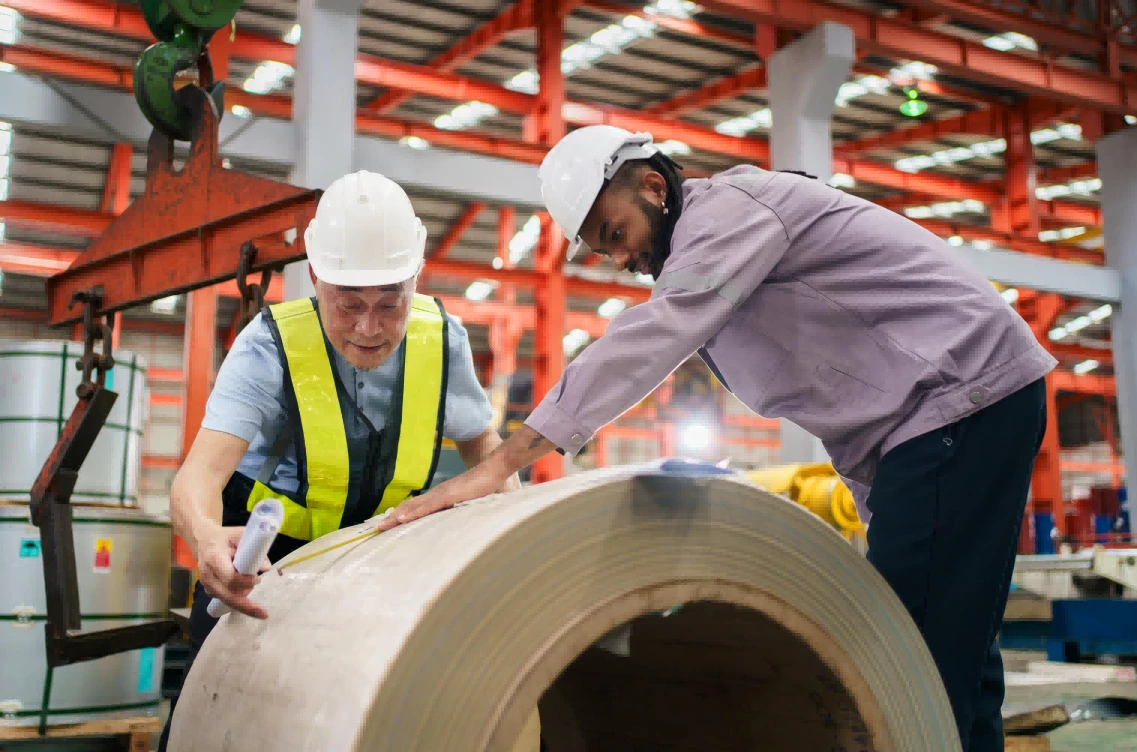
After receiving the client's demand feedback, I immediately launched a professional project team including technical engineers and solution designers to conduct a 3-day on-site field investigation at the Johannesburg steel factory in early March 2026. As the person in charge of the project, my core task was to fully sort out all on-site handling scenarios, accurately verify load parameters, and eliminate all hidden risks caused by mismatched equipment models and performance.
First of all, we conducted a comprehensive statistical analysis of the client's daily handling goods. The on-site mainstream handling objects were 16-19 ton hot-rolled steel coils, 15-18 ton bundled steel plates, and 12-20 ton metal billets. Combined with the client's future production capacity expansion plan, we confirmed that the equipment needed to reserve a certain load margin to avoid capacity insufficiency caused by subsequent production upgrades. Therefore, a 20-ton rated load capacity became our core parameter orientation for the customized forklift.
Next, we evaluated the on-site operating environment and handling workflow. The client's internal handling distance from the production workshop to the finished product warehouse is 300-800 meters, requiring frequent short-distance shuttle operations. The workshop and warehouse passages are wide enough, but there are frequent turning operations and narrow transition sections between functional areas, which require the forklift to have good operational flexibility and chassis stability. Combined with the 3 shifts per day 24-hour continuous working mode, the equipment must have durable continuous operation performance and low failure rate, and the power system needs to maintain stable output under long-term high-load operation.
Aiming at the high-temperature and high-dust working environment of the steel factory, we focused on verifying the environmental adaptability requirements of the equipment. The on-site long-term high-temperature radiation will cause heat accumulation in the forklift's engine, hydraulic system and tire parts, so the equipment must be equipped with an enhanced heat dissipation system. A large amount of floating metal dust and steel debris on the site requires the air intake system and hydraulic oil circuit to have efficient dust-proof and anti-blocking capabilities. In addition, aiming at the safety risks of heavy steel material handling, we confirmed that the equipment must be equipped with professional heavy-load safety protection mechanisms to avoid cargo tilting, overload operation and hydraulic failure risks.
During in-depth communication with the client's production supervisor and equipment management team, we also learned that their original forklifts had insufficient fork length and mast lifting height, which could not meet the stacking and high-position loading requirements of steel coils and steel plates. The client needed the new forklift to realize stable high-position stacking and container loading of heavy steel materials to improve warehouse space utilization and loading efficiency. Based on all on-site data and demand feedback, we finally sorted out a complete set of customized parameter indicators and functional requirements for the steel factory's heavy-load handling scenario, laying a solid foundation for the subsequent formulation of targeted Steel Factory Material Handling Solution.
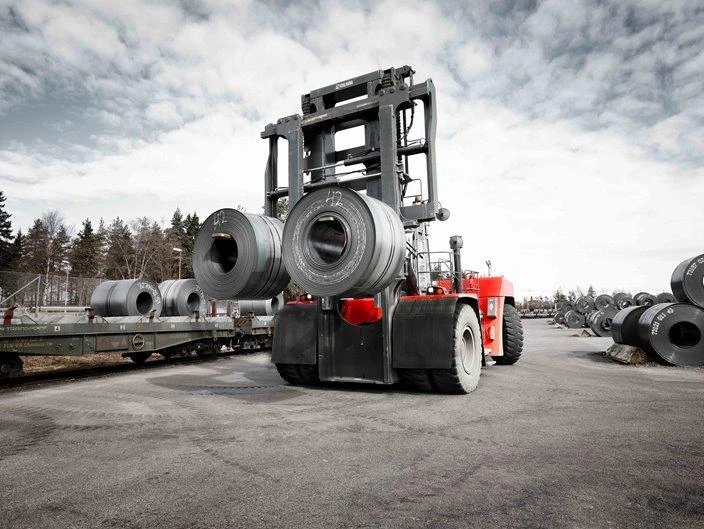
Based on the full on-site demand assessment and parameter verification results, our team officially launched the customized 20 Ton Heavy Duty Diesel Forklift for Steel Coil Handling solution for this South African steel factory. Different from ordinary standard forklifts, this solution is completely oriented to the extreme working conditions of the steel industry, with targeted upgrades in load performance, power system, environmental adaptability and safety configuration, focusing on solving the client's pain points of insufficient load, low efficiency, frequent failures and potential safety hazards.
In terms of core load parameters, we confirmed the rated load capacity of 20 tons and matched a standard 1200 mm load center. This load center design is more in line with the gravity distribution characteristics of large steel coils and bundled steel plates, effectively avoiding the problem of gravity offset and unstable center of gravity during heavy-load handling, and ensuring the overall balance of the forklift during driving, turning and lifting. To meet the client's high-position stacking and loading needs, we adopted a triplex mast with enhanced bearing and anti-tilting performance. Compared with the duplex mast, the triplex mast has higher lifting height and stronger structural stability, which can adapt to the high-position operation of steel finished product warehouses. Meanwhile, we configured 2400 mm ultra-long forks for the equipment. The extended fork body can fully support the overall structure of super-long steel plates and large-diameter steel coils, avoiding local stress concentration and cargo deformation or tilting caused by insufficient support area.
In terms of power configuration, we chose a high-power industrial diesel engine with a power output of 162 kW. This professional industrial engine has strong torque reserve and stable power output, which can maintain continuous and stable power supply even under 24-hour uninterrupted heavy-load operation and high-temperature environment. Compared with electric forklifts, diesel heavy-duty forklifts have stronger endurance and no battery charging restrictions, perfectly matching the client's 3-shift non-stop production rhythm, avoiding production stagnation caused by equipment power shortage, and greatly improving the continuity of logistics handling work. At the same time, we equipped the engine with a large-flow enhanced heat dissipation system and a multi-stage cyclone dust removal air filter. The heat dissipation system can quickly export heat generated by equipment operation under high-temperature radiation, preventing engine overheating and hydraulic oil deterioration; the high-efficiency dust removal filter effectively isolates metal dust and steel debris, avoids air intake blockage, and reduces equipment wear and failure rate.
For the harsh working conditions of steel factories, we have carried out all-round reinforcement and safety upgrades for the equipment. First, we adopted a reinforced integral mast structure and thickened high-strength steel chassis, which can resist long-term heavy-load impact and high-temperature aging, and greatly extend the service life of key load-bearing components. Second, the equipment is equipped with a full set of professional safety features: an intelligent overload protection system that automatically cuts off the lifting power and triggers an alarm once the load exceeds the rated standard, thoroughly eliminating unsafe hidden dangers of overloaded operation; a mature hydraulic stability system that optimizes hydraulic oil circuit pressure and flow control, ensuring smooth lifting and lowering of heavy steel materials without jitter or offset; an enclosed operator protection cabin with explosion-proof glass and dust-proof sealing design, which isolates high-temperature heat radiation and floating dust, protects the physical health and operation safety of drivers, and improves the comfort of long-hour operation.
The entire solution abandons the conventional standard equipment matching mode, and fully considers the long-term operation cost and stability of the steel factory. All upgraded configurations are targeted at the client's on-site pain points, realizing high load resistance, high temperature resistance, dust resistance and high safety of the equipment, which is a highly adapted Industrial Forklift Supplier customized solution for steel industry heavy-load scenarios.

After the completion of equipment production and factory debugging, we arranged professional international logistics transportation, and the customized 20-ton heavy-duty diesel forklift was successfully delivered to the client's Johannesburg steel factory in late March 2026. Immediately after the equipment arrived at the site, our overseas after-sales technical team rushed to the local factory to carry out on-site installation, assembly, commissioning and operator training work, ensuring that the equipment can be quickly put into formal production and operation.
First, our technical engineers completed the overall assembly of the mast, forks, hydraulic system and power system accessories, and conducted a comprehensive inspection of the equipment's circuit, oil circuit and safety protection devices to eliminate all assembly hidden dangers. After the assembly was completed, we carried out no-load debugging for 2 hours to verify the flexibility of the equipment's walking, steering, lifting and descending functions, and calibrated the overload protection system and hydraulic stability parameters to ensure that all performance indicators meet the customized design standards.
Subsequently, we launched strict on-site load-bearing simulation tests according to the client's actual handling scenarios. In the first formal load test, the forklift successfully and stably lifted a 18-ton hot-rolled steel coil with residual surface temperature, and completed a series of continuous operations including horizontal driving, 90-degree turning, low-speed shuttle and high-position stacking. The whole process was stable without jitter, offset or abnormal noise, and the hydraulic system operated smoothly with no pressure fluctuation. Afterwards, we completed a 19-ton bundled steel plate handling test and a 20-ton limit load static pressure test respectively. All test data fully met the design standards and steel industry operation requirements, and the equipment showed excellent stability and load-bearing performance in high-temperature and dust environment.
While completing the equipment commissioning and testing, our engineers provided systematic and professional operation training for the client's forklift drivers and equipment maintenance personnel. The training content included standard operation procedures for heavy-load handling, safety operation specifications in high-temperature and dust environment, daily equipment maintenance points, fault judgment and simple troubleshooting methods. We focused on teaching the operators the operation skills of heavy steel coil and steel plate stacking, and emphasized the use of the overload protection system and emergency response measures for abnormal conditions. After 3 days of on-site training and hands-on guidance, all client operators passed the assessment and mastered the standardized operation and daily maintenance methods of the new forklift.
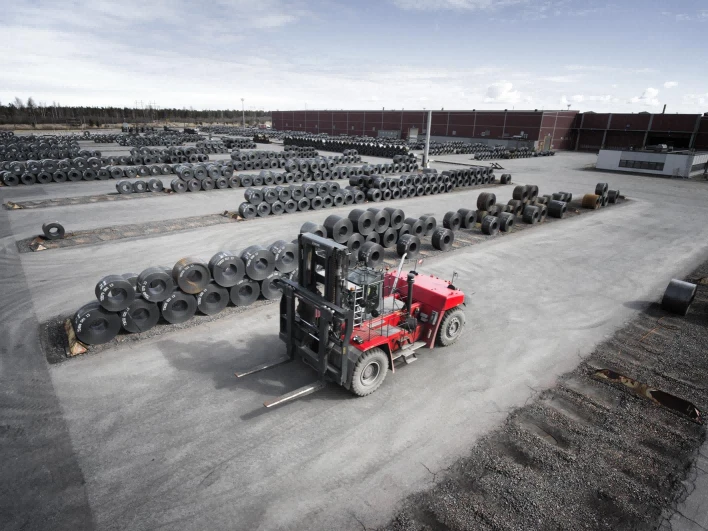
After one month of formal on-site operation and follow-up tracking, this Heavy Load Forklift Solution for Steel Factory Handling has achieved extremely significant practical application results, completely solving the client's long-standing heavy material handling difficulties and bringing comprehensive improvements in production efficiency, operational safety and equipment maintenance costs.
In terms of handling efficiency, the new 20-ton heavy-duty forklift completely replaces the original low-efficiency segmented handling mode. The single-time handling load is nearly 70 % higher than that of the old equipment, and the overall factory material handling efficiency has increased by 42 %. The original daily finished product loading and outbound work that required 8 hours of continuous operation can now be completed in less than 5 hours, greatly shortening the product delivery cycle and effectively supporting the client's expanding order production demand. The flexible cross-regional handling capability of the forklift also makes up for the functional defects of fixed gantry cranes, realizing the full coverage of logistics handling in all areas of the factory and eliminating logistics deadlocks.
In terms of equipment operation and maintenance, the customized high-temperature and dust-resistant design greatly reduces the equipment failure rate. The client's weekly regular maintenance frequency is reduced to once a month, and the annual equipment maintenance cost is saved by nearly 35 %. The reinforced mast and chassis structure reduce the loss of key components, and the service life of the equipment is significantly longer than that of ordinary standard forklifts. More importantly, the perfect safety protection configuration completely eliminates the hidden safety hazards of heavy-load handling. Since the new equipment was put into use, the factory has achieved zero safety accidents in material handling operations, realizing safe and stable production throughout the process.
In terms of operational experience, the enclosed dust-proof and heat-insulation cabin greatly improves the working environment of operators, avoiding the discomfort and health risks caused by long-term exposure to high temperature and dust. The stable hydraulic system and intelligent safety protection devices reduce the operation difficulty and effectively reduce the labor intensity of drivers.
The client's factory director gave high recognition and sincere praise to our solution and on-site service, and quoted formally in the project follow-up feedback:
"The customized 20-ton heavy load forklift solution completely solves our biggest bottleneck in steel coil and steel plate handling. The equipment runs stably in our high-temperature and high-dust workshop all day long, with high efficiency and low failure rate. Your professional engineering solution and thoughtful on-site service are far beyond our expectations, and we will choose long-term in-depth cooperation for subsequent equipment upgrades."
This project fully verifies that professional customized Heavy Duty Forklift for Steel Industry is not a simple equipment replacement, but a systematic engineering solution tailored for the extreme working conditions of steel factories. Only by combining on-site working environment, load parameters and production rhythm can we provide truly practical, efficient and safe Heavy Load Material Handling Equipment for heavy industry enterprises, and help customers reduce costs and increase efficiency in the fierce market competition.