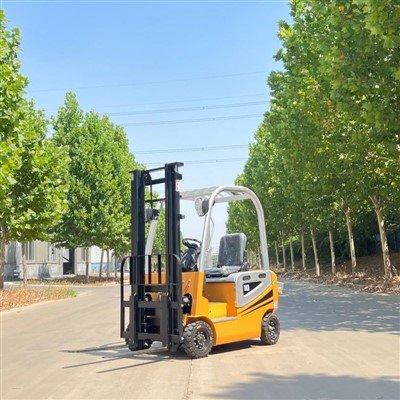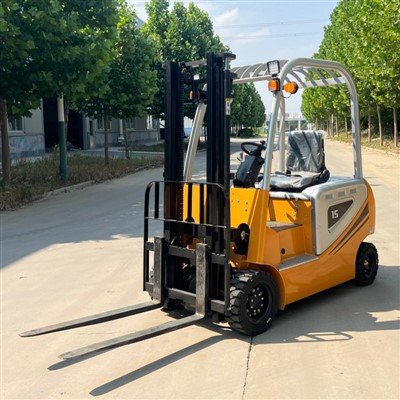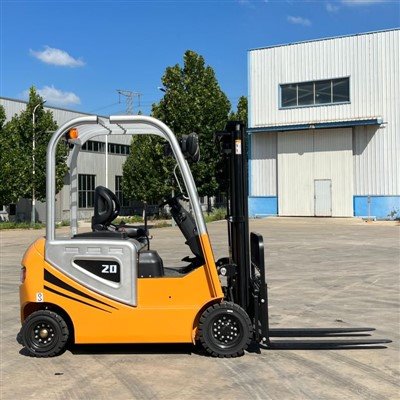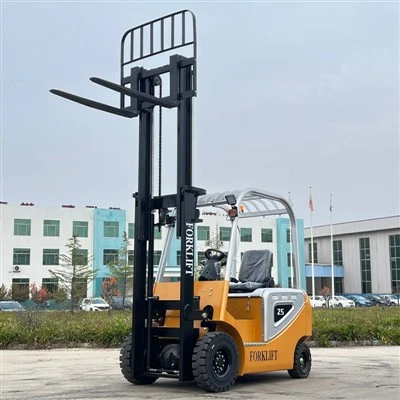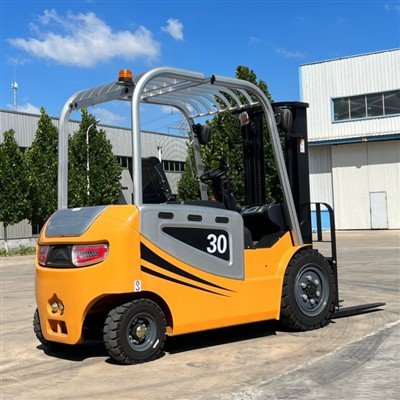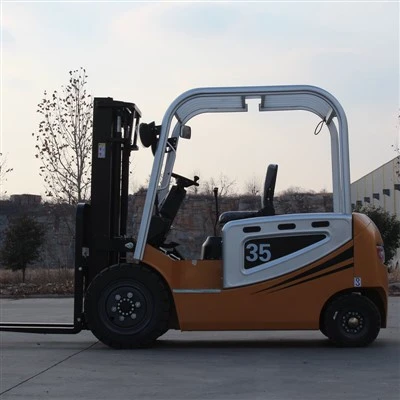
Early in 2026, a customer working on a remote mountain project asked me for a standard 5-ton forklift. It sounded like a normal request, until I looked at the site photos. The ground was not concrete. It was gravel, mud and rutted soil. There was a 15-degree slope between the unloading area and the storage yard, and the site faced a long rain season. I stopped and told the customer we needed to talk about the terrain before we talked about price.
That conversation changed how I choose forklifts for outdoor work.
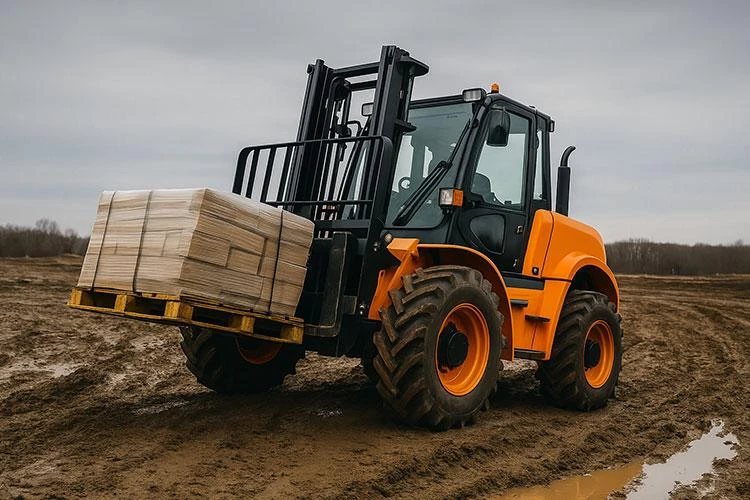
The customer managed a rural road project in a mountainous region of South America. They ran a small supply center at the foot of the mountain. Every week, five or six trucks arrived with cement bags, steel pipes and timber, about 15 to 20 tons per truck. The crew had to unload the trucks, move the material to an open storage yard, and later carry loads several hundred meters up to the work points.
The heaviest single loads were 1,000 to 1,500 kg. The total daily volume was 20 to 30 tons. The travel distance was up to 500 meters over gravel and packed dirt.
That sounds like a job for any forklift. But three conditions made it different. The yard turned to mud after rain. The 15-degree slope had to be climbed with every loaded trip. And the operator had basic experience, so the machine could not depend on perfect driving technique.
When I checked those conditions against a standard warehouse forklift, I saw four problems. Small tires and low ground clearance meant the chassis would hit stones and ruts, and the tires would sink in mud. Two-wheel drive meant the machine would spin and slide on the wet slope. The long rain season meant mud was a daily condition, not an exception. And a machine that kept getting stuck would delay the whole supply chain.
I told the customer honestly: a standard forklift might work for two weeks, then spend the next two weeks in repair. That is not a solution. The customer needed a rough terrain forklift built for outdoor conditions, and we went through the selection together.
Capacity came first, but not for the reason most people expect. We chose 5,000 kg, not because every load weighed 5 tons, but because the customer needed margin and stability. A 1.5-ton bundle on a 5-ton machine leaves a wide safety margin, and the extra weight keeps the machine steady on rough ground.
Four-wheel drive was next. On loose gravel and a 15-degree slope, traction decides everything. With all four wheels driving, the forklift keeps moving on wet mud and loose gravel. Two-wheel-drive machines lose traction the moment the wheels spin or the rear lifts. On this site, a 4 wheel drive forklift was not a luxury. It was the difference between moving and staying stuck.
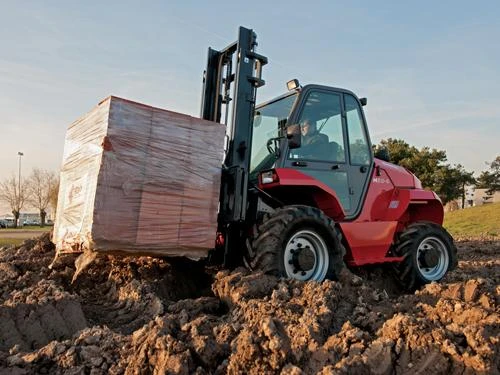
Tires were the part I refused to compromise on. The tire is the only part of the machine that touches the ground, and here the ground was mud and gravel. We chose wide off-road pneumatic tires with a deep tread. Wide tires spread the weight so the machine does not sink as easily, and the deep tread grips the surface when climbing.
Ground clearance mattered just as much. The yard had ruts, stones and tree roots. A low machine would hit its chassis on every obstacle. We chose about 300 mm of clearance so the underside could pass over what a warehouse forklift could not.
Finally, we looked at engine power and stability. The site had slopes and long travel days, so the engine needed enough torque to climb fully loaded and run all day without strain. And because safety matters more than speed on a hillside, we chose a machine with a wide wheelbase, a low center of gravity, and a mast that tilts to keep loads level on a slope.
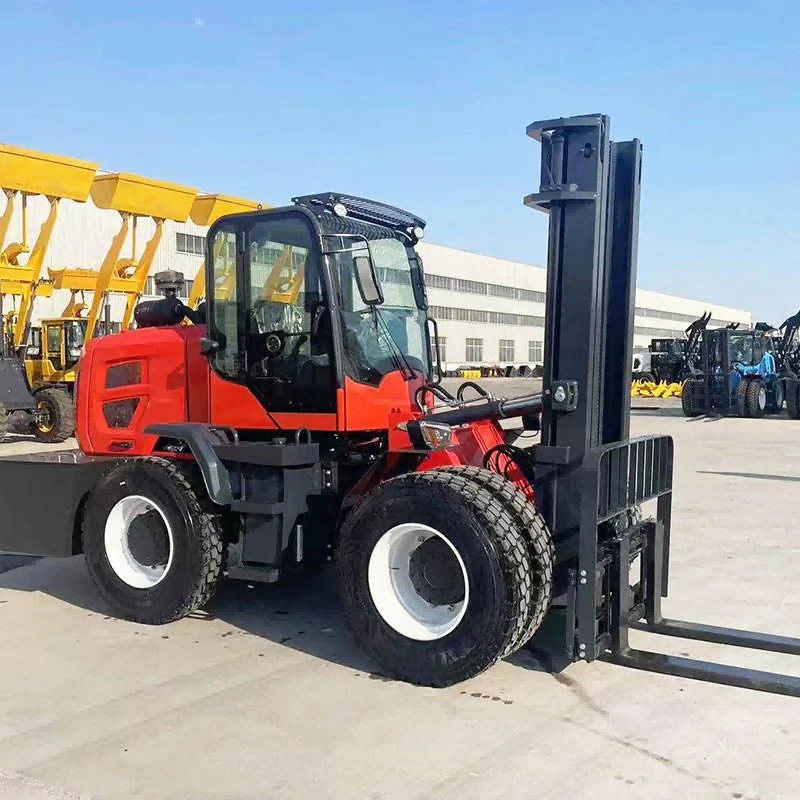
The machine arrived in the dry season. Unloading was the first test. A flatbed truck that used to take a full day with manual labor now took about two hours. The 3-meter lift height cleared the truck bed easily.
The slope was the real test. With a 1,500 kg cement bundle on the forks, the forklift climbed the 15-degree slope in low gear without slipping. The operator told me later that the moment he saw it climb with a full load, he stopped doubting the machine.
When the rain season began, the yard turned to mud. The machines the customer had tried before could not move in that mud. This forklift kept working. It sank a little in the softest spots, but the wide tires kept it moving, and the crew learned to avoid the worst patches. The machine ran six to eight hours a day, six days a week, and in the first three months it did not break down once.
We did hit problems, and we solved them together.
First, on a muddy patch at the bottom of the slope, the forklift lost traction for a moment. We set the tire pressure to the soft-ground setting so the tires spread wider, and we trained the operator to use the low-speed range in mud so the wheels do not spin. After that, the same patch was never a problem again. I learned that the machine is only half the solution. How it is set up and driven is the other half.
Second, the customer worried about maintenance so far from a service center. I walked them through the maintenance points before delivery. The engine access is straightforward, we supplied a spare parts kit for the first two years, and we sent the maintenance schedule in their language. Their own mechanic handled the routine service.
Third, there was the cost. A rough terrain forklift costs more than a standard one, and I did not pretend otherwise. But we compared the real costs. The forklift replaced rented crane time, most manual handling, and the downtime of the machines they had tried before. When we added those savings together, the total cost of ownership was lower. After the first season, the customer ordered a second machine for a nearby site.
I used to think lifting capacity was the first thing a customer should consider. After this project, I realized that terrain often decides whether a forklift can do the job at all.
Now I check the ground first, then the slope, then the loads, then the working hours, then maintenance and safety. A forklift for a flat factory floor can be chosen mainly on capacity. A forklift for a mountain project has to be chosen on terrain first, and capacity second.
The right forklift is not always the one with the highest capacity. It is the one that matches the real working environment. If you are buying a forklift for a construction site, a farm, or any outdoor job, start with the ground conditions, not the spec sheet.