How to Choose the Right Equipment for Difficult Ground Conditions
Most forklift troubles on construction sites rarely happen within enclosed storage areas. Issues tend to crop up while hauling materials from stock zones out to active construction work areas.
A newly compacted site roadway might seem passable early in the day. Yet after heavy rainfall, constant truck back-and-forth and frequent material transportation, these paths soon turn bumpy, muddy and hard to traverse. Projects transporting steel components, precast concrete segments, piping, lumber and general building supplies all face the same headache: maintaining steady material flow when uneven terrain turns into the primary operational hurdle.
This is exactly where rough terrain forklifts deliver tangible practical value.Even so, picking out a suitable rough terrain forklift is far more than just opting for a unit with oversized tyres and powerful engines. Within genuine construction site scenarios, the decision has to factor in ground surface conditions, types of loads to be lifted, driving distances, daily working intensity and overall site layout.
A forklift that runs smoothly on gravel roadways may struggle badly on waterlogged, muddy infrastructure building sites. Distinguishing between these varying site conditions is the key to picking matching machinery and avoiding costly ill-suited equipment purchases.
Why Unpaved Construction Roads Create Hidden Forklift Problems
A lot of contractors first resort to ordinary diesel forklifts for outdoor construction work, judging only that the lifting loads seem comparable. Problems only surface once the machines go into formal operation.
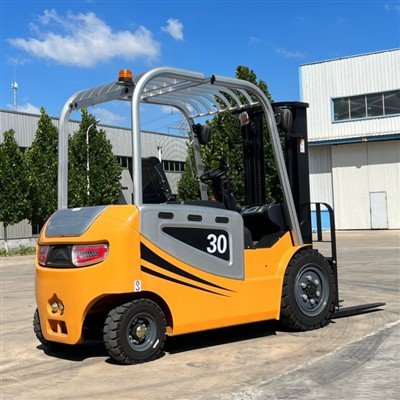
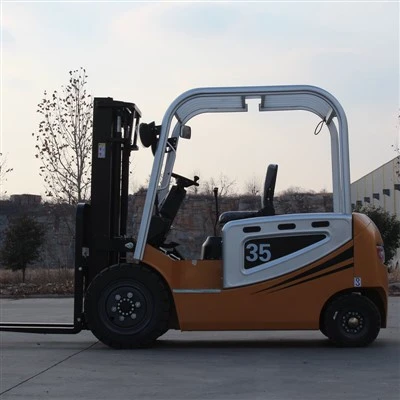
Standard forklifts are engineered to run on firm, level ground like concrete flooring, paved yards and indoor warehouse floors. Running them over uneven unhardened ground will trigger a string of issues:
Insufficient grip on loose soil and gravel; Excessive vibration while travelling; Poor stability when carrying heavy loads; Rapid tyre abrasion; Heightened tiredness for operators doing long-distance transfers.
These faults are never just mechanical troubles on site,they drag down the whole construction workflow.Take a precast concrete assembly project for instance. Construction teams have to shuttle building components from temporary stockpiles to various working spots hundreds of metres apart. If the forklift cannot travel steadily over bumpy roads, workers have to arrange extra handling work, idle waiting time piles up, and the whole construction timeline becomes difficult to manage.
That explains why most contractors switch to rough terrain forklifts once outdoor material transport turns into daily routine work instead of occasional one-off jobs.
Real Construction Applications: Where Rough Terain Forklifts Make Sense
Official application cases released by manufacturers including Manitou, JCB and other off-road machinery brands prove rough terrain forklifts are widely deployed across construction, farming, infrastructure engineering and outdoor logistics sectors.
(Reference: official product and application case pages of Manitou rough terrain forklifts and JCB construction machinery.)
Even so, the industry category itself is not the deciding factor; site working conditions matter most.
1. Construction sites with temporary access roads
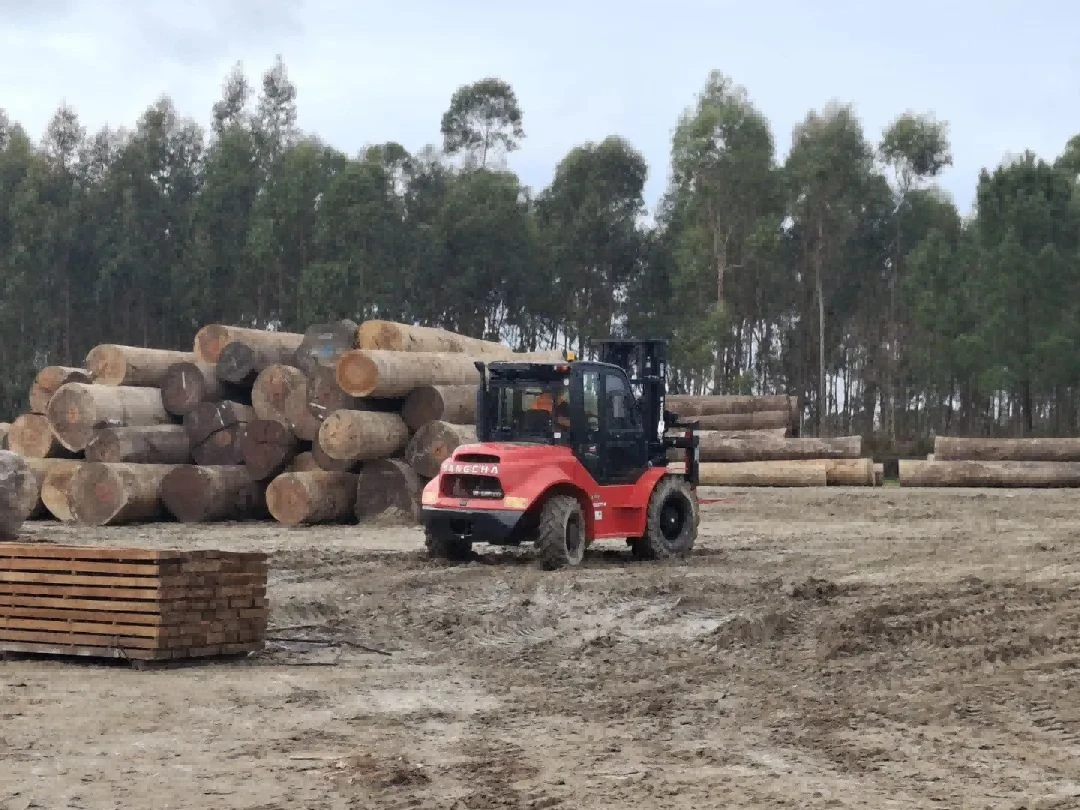
Ground conditions on large construction sites keep shifting constantly. In the early phase of construction, site access roads are usually nothing more than compacted gravel or simple temporary dirt tracks. Constant running of trucks, cranes and various engineering vehicles keeps churning and altering the road surface nonstop.
Common cargo to be transported on site covers:
steel pipes; concrete blocks; building bricks; formwork accessories; palletised construction supplies.
Under such circumstances, rough terrain forklifts deliver far superior mobility. They are purpose-built to navigate these rugged outdoor surfaces that pose major obstacles for standard indoor forklifts.
2. Infrastructure and Remote Projects
Roadworks, bridge construction and utility projects are mostly located in remote areas with no mature supporting infrastructure.Their material handling scenarios are very different from regular urban construction yards.
Forklifts here often have to operate:
far from paved road networks; on rough, uneven terrain; on sloped and constantly changing ground; under unpredictable weather conditions.
In these scenarios, mobility matters just as much as lifting capacity.
A forklift with strong lifting performance is useless if it cannot travel steadily to the actual working zone.
What Actually Makes a Rough Terrain Forklift Different?
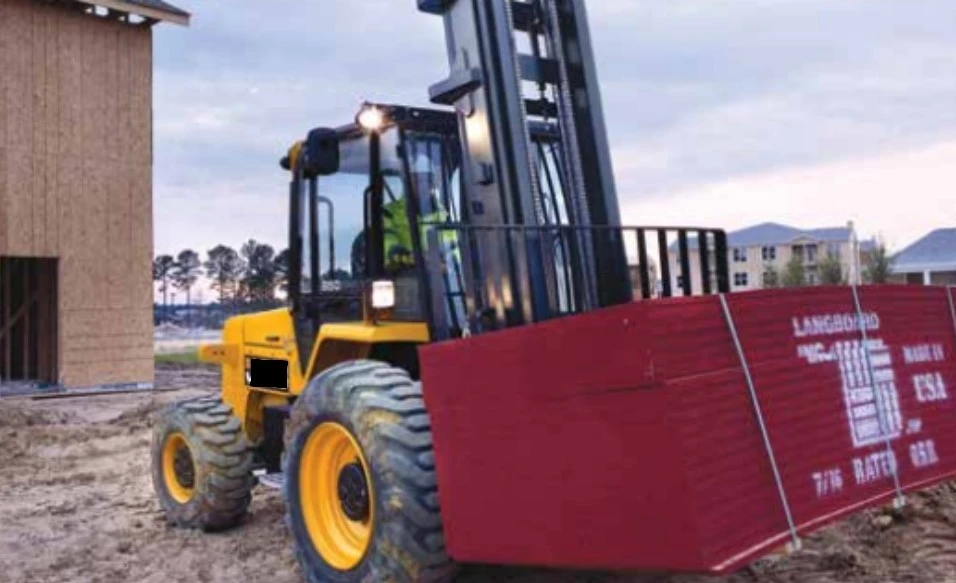
A common misconception is that rough terrain performance relies solely on larger tires.In fact, it comes from a combination of multiple structural designs.
1. Four-Wheel Drive for Unstable Surfaces
Four-wheel drive is a core feature for outdoor construction work.
On loose gravel, wet soil and uneven ground, power delivered to all wheels maintains steady traction, even when part of the ground surface offers poor support.Still, four-wheel drive does not mean the forklift can tackle all terrain.
Deep mud, extremely soft soil and unstable slopes often require alternative equipment or basic ground conditioning before operation.
2. Higher Ground Clearance
Construction site roads are never perfectly level.Small obstacles like scattered stones, concrete debris and uneven road sections easily hinder standard forklifts with low ground clearance.Higher ground clearance avoids chassis scraping and enables smoother travel over rugged surfaces.
For outdoor job sites, this is not an optional upgrade - it directly determines the machine's on-site availability.
3. Pneumatic Tires and Suspension Design
Solid tires are widely used in warehouses, thanks to their durable performance on flat, smooth floors.Outdoor construction sites are a completely different scenario.Pneumatic tires better absorb impacts from uneven ground and maintain consistent contact with irregular terrain.
Most rough terrain forklifts are also fitted with oscillating axles, which keep all wheels grounded on bumpy surfaces.
This design is critical for preserving load stability during travel.
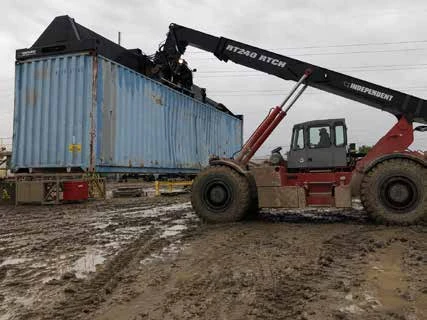
A Real Selection Question: Do You Really Need a Rough Terrain Forklift?
Not every outdoor project needs a rough terrain forklift, a key consideration that is often overlooked in equipment selection.
Rough terrain forklifts are ideal when these conditions apply:
daily outdoor material handling is required; operation routes cover gravel, dirt and uneven ground; loads need frequent transportation across different work zones; site terrain and weather conditions change regularly.
Meanwhile, they are not always the optimal choice in the following scenarios:
primary operation is on finished concrete pavement; work is limited to indoor warehouse storage; high stacking height is the core operational demand; tasks require dedicated telescopic outreach functionality.
For instance, urban-based construction material warehouses perform better with standard diesel or electric forklifts.In contrast, remote construction sites with temporary rugged roads can fully leverage the advantages of rough terrain forklifts.When selecting equipment, the focus should never be on finding the most powerful forklift.The core is to pick the model that best fits the actual working environment.
Rough Terrain Forklift vs Other Equipment: Making the Right Choice
During construction planning, buyers often compare rough terrain forklifts with other machines.
Rough Terrain Forklift
Well suited for:palletised building supplies; frequent loading and unloading work; hauling goods outdoors between different construction zones.
Telehandler
A more sensible option in cases where:extended horizontal outreach is necessary;materials need to be positioned at elevated heights;operations demand both vertical lifting and forward extension.
Wheel Loader with Fork Attachment
Better when:The priority is ground movement ability; Material handling is secondary;The final selection hinges on core on-site operational demands.A rough terrain forklift cannot take the place of all construction handling equipment.
It is engineered to solve a targeted problem: transporting conventional palletised loads over rugged ground where standard forklifts cannot run efficiently.
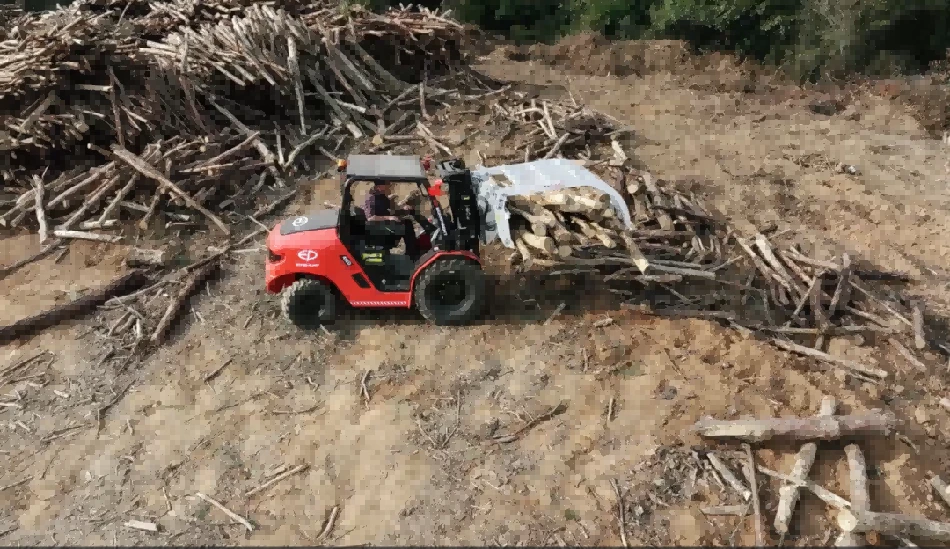
Key Questions Before Purchasing a Rough Terrain Forklift
Before settling on equipment, contractors need to run through these practical assessments one by one:
Ground Conditions
Gravel surfaces?Muddy ground?Sandy terrain?Uneven compacted soil?Inclined slopes?
Material Type
Weight of typical loads; Overall size of goods; Styles of pallets in use; Daily lifting frequency.
Working Environment
Fully outdoor operation or a mix of indoor and outdoor work? Average travel distance for material transfers? Exposure to harsh outdoor weather conditions?
After-sales Service Factors
Construction machinery runs under harsh working conditions. Before placing an order, it is necessary to confirm convenient local maintenance service, sufficient supply of spare parts and timely on-site technical support.
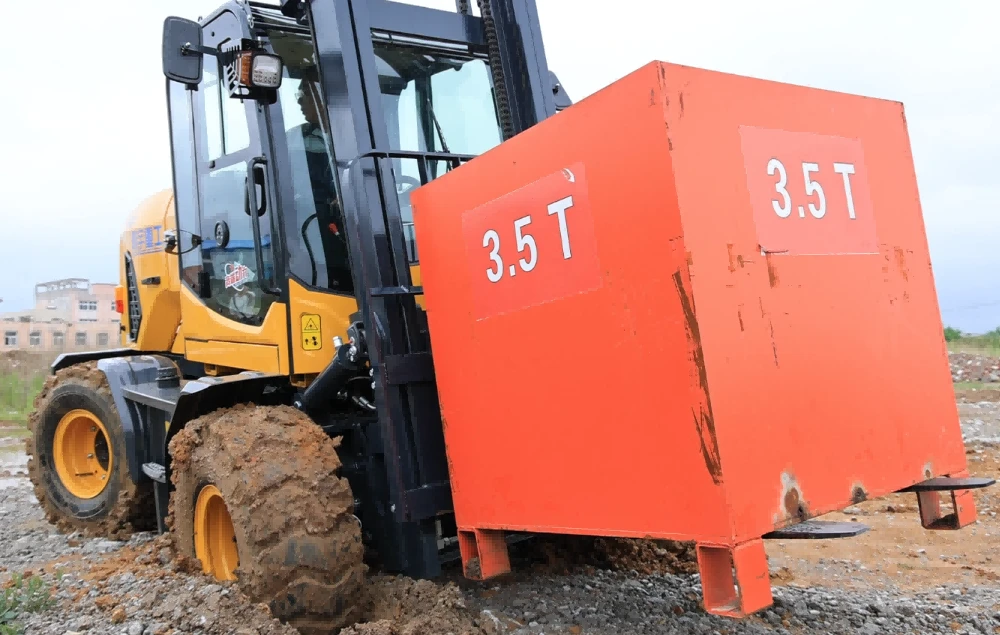
Final Thoughts
A rough terrain forklift is not just an upgraded, heavier-duty version of a standard forklift.
Its true value lies in tailored design that addresses real construction pain points: unstable temporary roads, constantly changing ground conditions and frequent outdoor material transit.The biggest mistake in forklift selection is prioritising lifting capacity above all else.A 5-ton forklift that cannot travel safely across site terrain and reach work zones will create more problems than it solves.
For construction sites with unpaved, rugged roads, the correct selection logic starts with a full assessment of on-site conditions:
Where will the forklift need to travel?What types of materials will it handle?How frequent are the daily operations?
Once these key factors are clarified, choosing a well-matched rough terrain forklift becomes far more simple and accurate.