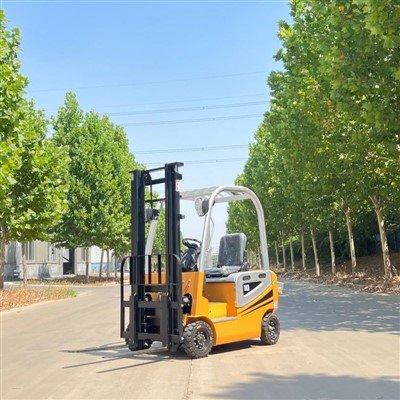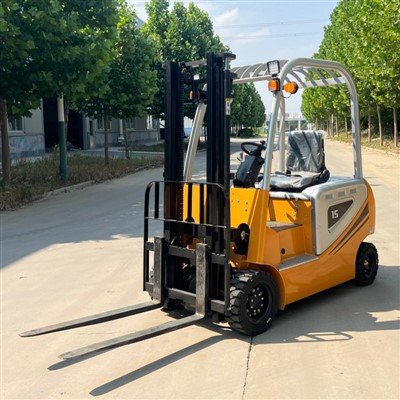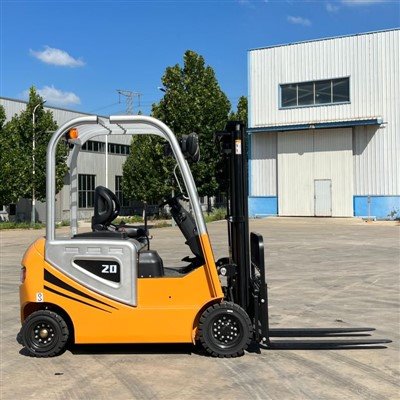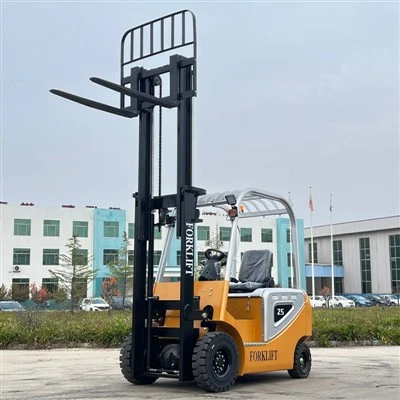
When chemical facilities prepare to procure new forklifts, conversations with suppliers often follow a familiar pattern.
"We need a 3-tonne forklift." "Required lifting height is around 5 metres." "Can you supply models with ATEX certification?"
These requests are reasonable. Every forklift project eventually comes down to specifications, lead time and budget.
Nevertheless, after supporting numerous chemical manufacturers, we have reached a clear conclusion: equipment selection should not begin with the forklift.
The critical question is not: Which explosion-proof forklift should we buy?
Instead, operators must first consider: What operating conditions will this forklift encounter once it enters the site?
Forklifts handling finished pallets inside standard warehouses operate within stable, predictable environments. Conditions inside chemical plants are vastly different.
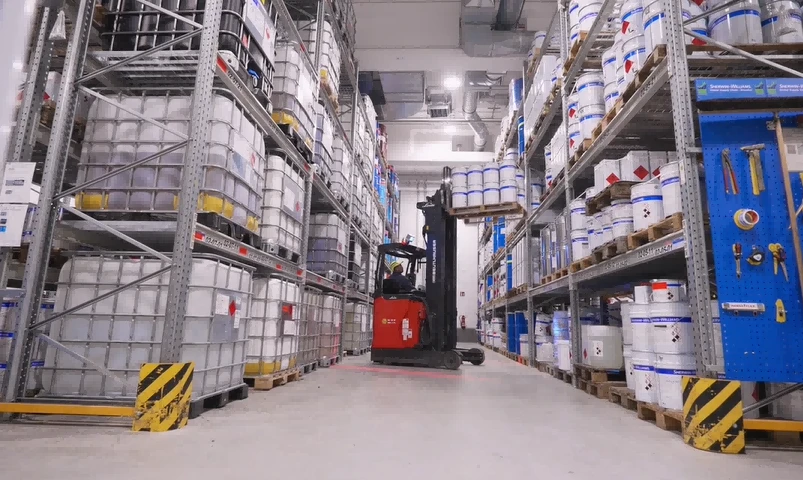
A unit may transport solvent-filled Intermediate Bulk Containers (IBCs) to the tank farm in the early hours, feed raw materials to blending production lines throughout the day, and deliver filled chemical drums to hazardous goods warehouses before shift handover. Along its route, the forklift will pass through multiple hazardous zones, narrow production aisles, pipe racks, wash-down zones and outdoor loading ramps. Every part of that route places different demands on the equipment.
For this reason, experienced Environment, Health & Safety (EHS) managers and plant engineers dedicate far more effort to evaluating operating environments than comparing forklift technical parameters.
When selecting equipment for hazardous locations, poor choices are not always limited to underpowered machinery.
Sometimes it is choosing a perfectly certified truck for the wrong operating conditions.
Why Explosion-Proof Certification Alone Cannot Resolve Core Risks
Many buyers assume the decision becomes straightforward once they know the hazardous area classification.
"If the area is Zone 1, purchase a Zone 1-rated explosion-proof forklift." "If it falls under Zone 2, specify Zone 2-compliant models."
This logic appears sound on the surface.
Real-world production environments, however, are far more complex.
Hazardous area classification defines areas where explosive atmospheres can occur. While it is one of the most important inputs for equipment selection, it is only one part of a full risk assessment framework.
A professional hazardous area assessment report is far more than a simple list of zone classifications. When defining areas at risk of explosive atmospheres, assessors must take full account of ventilation, substance release frequency, material physicochemical characteristics, production workflows and other parameters. Across Europe, these assessments are an integral component of the ATEX risk management framework. Many industry experts advise reviewing zone boundaries following any changes to manufacturing processes; hazardous area classifications should never be considered permanent.
This point carries major significance.
Numerous hazardous-area experts have noted that older manufacturing sites were once almost entirely designated Zone 1. While seemingly a conservative safety approach, this forces facilities to deploy high-specification explosion-proof equipment site-wide, drastically raising upfront capital expenditure and long-term maintenance costs. Following reassessments of ventilation, process layouts and emission sources, many factories can downgrade certain areas to Zone 2 or even non-hazardous zones without compromising safety standards.
Such findings completely reshape selection strategies.
Rather than fixating on "which forklift carries the highest explosion protection rating", a more rational approach asks: Which zones genuinely require explosion protection? How much time will equipment spend operating within these environments?
This shift in mindset often exerts a greater impact on project costs and operational efficiency than comparing forklift specifications.
Multiple Explosion Protection Solutions for a Single Chemical Site
A chemical plant rarely has just one type of hazardous operation.
The Sun Chemical manufacturing site in Yate, UK, is a good example.
The facility manufactures and stores solvent-based printing inks, with more than one million kilograms of finished products stored in IBCs and drums. Different parts of the plant are classified as Zone 1, Zone 2 and Zone 22 depending on manufacturing activities and the materials involved.
At first glance, it might seem easier to standardize the entire forklift fleet with the highest level of explosion protection.
That isn't what happened.
Instead, different forklifts were configured for different operating tasks.
Diesel forklifts working mainly in outdoor storage areas and finished-goods warehouses were fitted with active gas detection systems.
If solvent vapour reached 10% of the Lower Explosive Limit (LEL), operators would receive visual and audible warnings. If vapour concentration continued to rise, the truck would initiate an automatic controlled stop to lower ignition risks.
Meanwhile, forklifts deployed within Zone 1 production areas follow a different protection approach. These units must maintain safe operation where explosive atmospheres can form under normal production conditions.
The key takeaway lies not in the technology, but in the decision-making framework.
Rather than asking whether a single explosion-proof forklift could cover all site tasks,
the site team first analysed each truck's travel paths, frequency of entry into hazardous zones, materials handled, and the precise protection requirements for every operational stage.
Equipment selection only started once this operational review was completed.
Commonly Overlooked Factors Before Buyers Compare Forklift Specifications
This is where disagreements frequently emerge during procurement discussions.
Load capacity, battery technology and explosion-proof certification remain important criteria.
But once those baseline requirements are met, another set of questions usually becomes far more influential.
How frequently will the forklift enter hazardous zones?
Will operators remain inside the zone for several minutes or several hours per shift?
Does the route involve corrosive cleaning chemicals or only occasional solvent exposure?
Will narrow pipe-lined corridors restrict minimum turning radii?
Does the forklift travel between indoor production lines and outdoor loading bays dozens of times every shift?
None of these details appear on standard specification datasheets.
Yet they often determine whether a forklift stays productive over its ten-year service life - or becomes an expensive compromise only months after commissioning.
This is exactly where many explosion-proof forklift projects either succeed or begin accumulating hidden operational problems.
Beyond ATEX Certification: Key Factors Governing Long-Term Equipment Performance
After defining hazardous zones and required explosion protection levels, many purchasers believe the most challenging phase of the project is complete.
In reality, the practical decisions that determine real-world performance are only beginning.
Explosion-proof forklifts are engineered to eliminate potential ignition sources. This does not mean they can withstand every operating challenge within chemical facilities.
Corrosion provides a clear illustration.
Forklifts operating inside warehouses storing packaged chemicals face vastly different conditions from units working adjacent to reactors or solvent blending lines. The former typically encounter vapours only occasionally; the latter are exposed daily to corrosive residues, frequent wash-downs, high humidity and airborne chemical contaminants.
ATEX zone classification remains unchanged for both operating profiles.
Yet corrosion can significantly shorten forklift service life in both scenarios.
Electrical connectors, cable protection, exposed metal components and hydraulic systems may all require more frequent inspections if chemical exposure occurs during routine operations. Selecting a forklift based only on explosion protection while overlooking environmental durability often leads to rising maintenance costs long before the unit reaches the end of its expected lifecycle.
The same principle applies to temperature classification.
Many procurement teams compare protection ratings without verifying whether the equipment's maximum surface temperature actually matches the ignition characteristics of on-site chemicals.
Temperature class is not simply another item listed on a certification document.
It directly determines whether hot surfaces can potentially become ignition sources under abnormal operating conditions. Correct temperature class selection therefore depends on understanding both hazardous substance properties and site operating environments - rather than defaulting to the highest available specification.
Factory-Integrated Explosion-Proof Forklifts vs. Converted Standard Forklifts: No Universal Answer
Nearly every explosion-proof forklift project raises the same question: Should facilities purchase factory-integrated explosion-proof forklifts, or carry out explosion-proof conversions on existing standard forklifts?
Objectively speaking, neither option holds an absolute advantage; suitability depends entirely on real on-site operating conditions.
If a forklift enters hazardous zones only occasionally under stable working conditions, converting an existing unit represents a viable solution. Qualified conversion specialists can install dedicated protective hardware while preserving the original ergonomic design, including spark-resistant fork guards, fully sealed electrical assemblies, temperature monitoring, and static charge control systems.
Infrequent intermittent usage,however, differs entirely from continuous production-site operation.
When forklifts spend most of their working hours inside hazardous zones, the discussion often shifts beyond the initial purchase price.
These include maintenance procedures, spare parts availability, inspection records, technical documentation and ongoing compliance audits, all of which factor into the total cost of ownership.
Many experienced EHS teams therefore evaluate explosion-proof forklifts as long-term safety assets rather than isolated equipment purchases. The objective is not simply to pass a one-time inspection, but to ensure the unit remains compliant, maintainable and reliable throughout its service life.
That is why the lowest purchase price is not always the lowest long-term operating cost.
Hazardous Goods Warehouse Case Study: Success Rests on Details
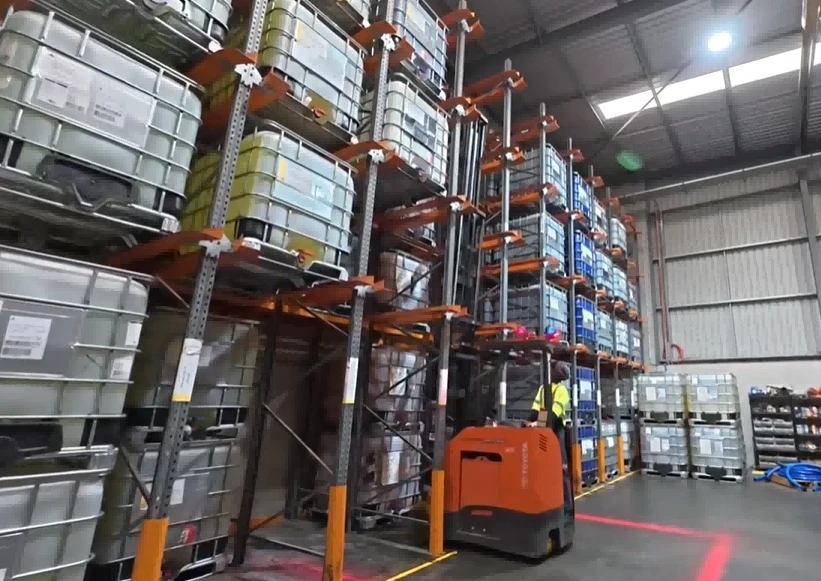
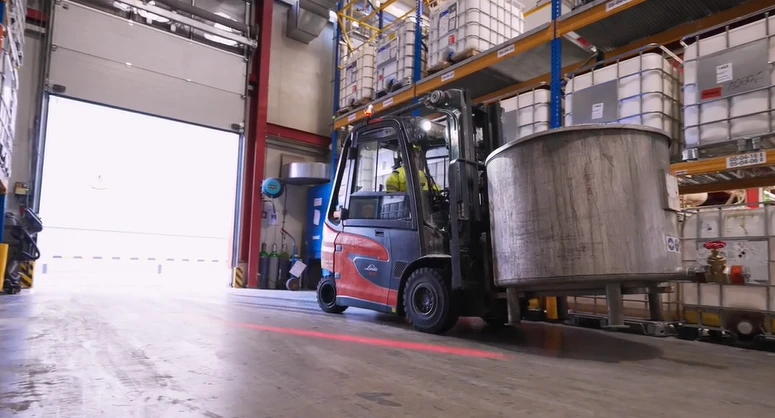
The hazardous goods warehouse operated by Chemion Logistik in Germany perfectly illustrates this principle.
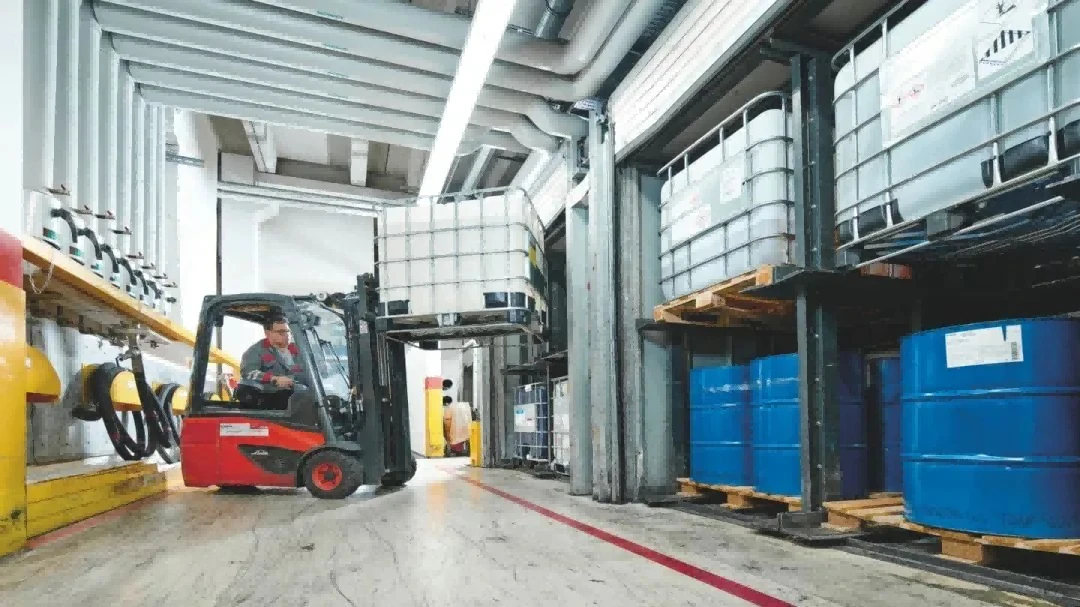
The facility handles roughly 200 pallets daily, storing flammable liquids, solid chemicals and other dangerous goods. During material handling operations, leaked solvents evaporate and mix with ambient air, forming potentially explosive atmospheres.
Rather than simply purchasing a standard explosion-proof forklift, the company systematically eliminated on-site ignition sources through a full-package solution:
Stainless steel-coated fork tines to minimise sparks caused by impact and friction;Specialised protective enclosures for all electrical components;
Conductive wheels, floor mats and internal assemblies to control static electricity build-up;Continuous monitoring of battery outgassing and surface temperatures to mitigate residual ignition risks.
Interestingly, the warehouse structure itself also played an important safety role.
The building featured open structural sections to disperse solvent vapours and reduce the risk of explosive atmospheres accumulating within the facility.
This highlights a point that is easily overlooked.Explosion protection is rarely achieved by forklift hardware alone.
It comes from equipment design, plant layout, ventilation systems, operational procedures and maintenance working in tandem.
Modifying only one component of this system seldom eliminates risks completely.
Critical Questions to Resolve Before Requesting Quotations
After reviewing a wide range of chemical industry projects, one pattern emerges repeatedly.
The most successful forklift procurement processes start long before suppliers submit formal quotations.Instead of only requesting specifications such as load capacity or mast height, experienced buyers first gather detailed operational data. Questions like these support focused, productive discussions:
Which hazardous zones will the forklift enter during a standard shift?
Do risks stem from flammable gases, vapours, combustible dusts, or a mixture of these substances?
How many hours each day will the truck operate within hazardous areas?
Could chemical corrosion impact the equipment's long-term reliability?
Can ventilation upgrades, process adjustments or layout revisions shrink the extent of classified hazardous zones?
Does the site have the resources to handle ongoing maintenance and statutory inspections?
The answers determine not only the type of explosion-proof forklift required, but also shape the overall investment strategy.
Conclusion
Choosing an explosion-proof forklift is rarely about selecting the highest specification available.
It is about understanding how materials move through the plant, where hazardous atmospheres may actually exist, and how personnel, equipment and production workflows interact each day.The most successful projects do not always deploy the most sophisticated forklifts.
More often, they integrate hazardous area classification, production workflows, equipment selection and long-term maintenance planning from the project outset.When all these elements align, an explosion-proof forklift becomes more than just compliant equipment.
It develops into a dependable component within the full chemical material handling system. It supports safety, productivity and operational continuity over many years - instead of only satisfying the requirements of a single inspection.